
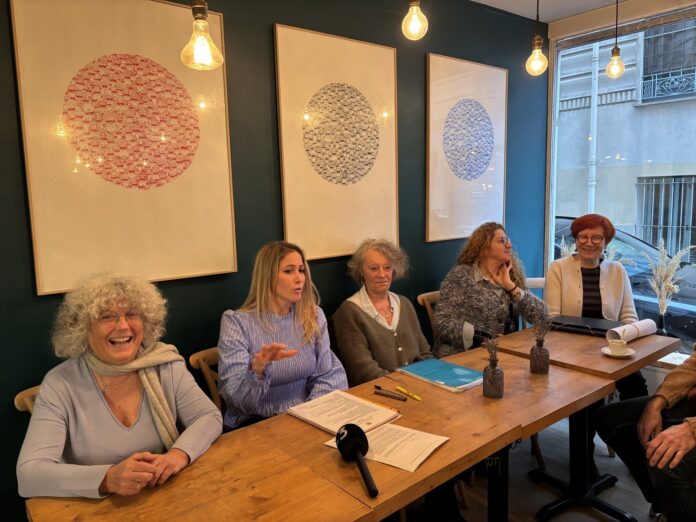
The independent and non-partisan citizen collective is finalizing its list of running mates and detailing its priorities for the next term in case of victory. A crucial deadline is approaching: February 26, the official deadline to submit the names of the candidates.
The campaign for the 2026 municipal elections is taking shape in the 5th largest city in France, and among the emerging movements, Nice Direct Democracy aims to present itself as a 100% citizen alternative. The collective, already active in local projects and citizen assemblies, is currently working on the formation of its list of 69 running mates, some of whom will be revealed before the February 26 deadline. According to Sylvie Bonaldi, a running mate and opposition councilor, “the only difficulty at this stage is that even if we are motivated, the candidacy must be validated by the citizen assembly to determine whether everyone appears on the list.”
The group aims to gather diverse profiles. Students, retirees, professionals, men, and women, are invited to join this citizen project to represent the diversity of the people of Nice. As Sylvie Bonaldi highlights, “at the outset, maybe the group is more women, but it is not a list to hold a position; we start from scratch.” The goal is to ensure that each elected official will be a spokesperson for the citizens and advocate for ideas emerging from the assemblies open to all.
A program focused on participation and transparency
The program of Nice Direct Democracy is based on three pillars: participatory democracy, transparency, and local autonomy. The list intends to place the citizen at the heart of municipal life, with neighborhood councils where residents can co-decide, as well as local referendums and consultative votes for major projects and significant expenses.
Transparency regarding the budget and subsidies is also a key point: citizens will be able to access all information and follow the expenditures of the municipality.
The list is also very active on concrete everyday issues. Social housing and intergenerational diversity will be encouraged, with the rehabilitation of vacant homes and participatory projects aimed at fostering inclusion.
Local agriculture and food autonomy form another pillar of the program, with the creation of partnerships between producers and school or business canteens, and the promotion of short supply chains to properly remunerate farmers and preserve the soils.
Urban insecurity and police proximity are also addressed: the collective wants to develop co-constructed action plans with residents, including community policing and prevention, while promoting transparency and the effectiveness of interventions.
Finally, culture, transportation, and public spaces are incorporated into a participatory approach, allowing the people of Nice to select and design locations according to their needs and comfort.
Alliances, political strategy, and second-round issues
The second round raises the question of alliances with other parties. Sylvie Bonaldi emphasizes, “in the second round, we might be able to discuss with the left if the other lists agree with our idea of direct democracy and open debate. On many issues, there should be no taboo.”
This strategy is not only collective: it also affects the personal position of some elected officials, like Sylvie Bonaldi herself, who may lose her opposition post. She clarifies, “if I had not distanced myself from the group of ecologists, I would have my place on their list very easily. But I wanted to reclaim my freedom of expression.”
For the collective, the idea is not to align with a party for personal interests, but to ensure that any alliance respects direct democracy and citizen debate, with independent experts and transparent decisions. Sylvie Bonaldi adds, “we are ready to debate all issues. Debate is lacking in some parties. Those people need to come to us for it to be done properly.”
The electoral calendar adds an additional pressure: the list must be complete and validated before February 26 to be able to run in the March 2026 elections. This deadline underscores the urgency for the collective to finalize the candidacies while maintaining its citizen principles.


