
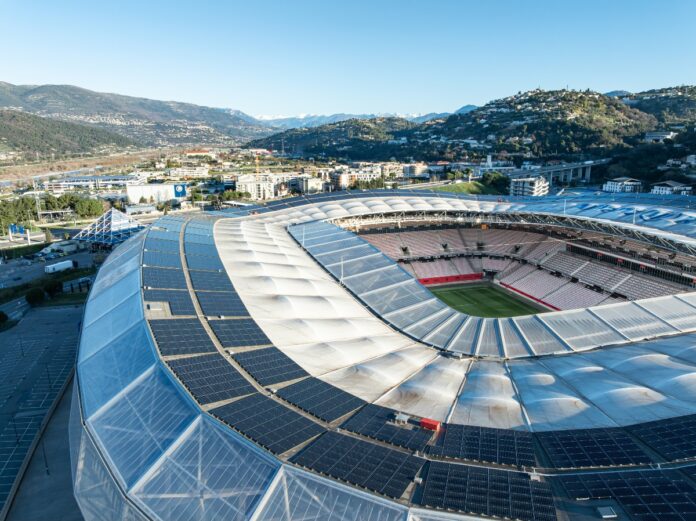
The question of sites in Nice for the 2030 Winter Olympics remains open. With the municipal refusal to install the ice rink at the Allianz Riviera Stadium and an upcoming governmental decision, the local organization of ice events is entering an adjustment phase.
The preparation of the 2030 Winter Olympic and Paralympic Games in the French Alps is going through a period of uncertainty concerning Nice. The issue is a disagreement over the infrastructure planned to host the ice events. The Minister of Sports, Marina Ferrari, has spoken out to ease tensions. A final decision is announced for the end of June.
The initial project plans for the temporary transformation of the Allianz Riviera into an Olympic site for ice hockey events. Nearby, a new complex dedicated to figure skating and an Olympic village are to be constructed. This setup has faced local opposition since the election of Mayor Éric Ciotti.
The new mayor shows support for keeping the Games in the city, while rejecting the current plans. Several arguments are made. The unavailability of the stadium for the local football club for six months is considered problematic. The overall cost of the project is also criticized. Finally, the creation of new infrastructure is contested. An alternative is proposed, relying on existing facilities, particularly the Jean Bouin ice rink, which is due for major renovation.
Finding a balance for Nice’s sites
The situation in Nice fits into a wider schedule. The entire map of Olympic sites must be validated by June. This timeframe allows for the integration of municipal election results and refinement of financial estimates. The minister emphasizes this rationale of consultation and budgetary precision.
During a public intervention, Marina Ferrari stated: “Today, among the candidate cities, there is no desire to drop out of the site map, quite the contrary.” This stance aims to reassure the commitment of the concerned territories. Nice hence remains integrated into the plan, despite the ongoing debates.
Meanwhile, regional pressure is mounting. Renaud Muselier, also president of Solideo, mentions the need for a quick decision. A deadline is set for late April to clarify the situation in Nice. In case of a stalemate, an alternative scenario is hinted at.
The Minister of Sports currently rejects this idea of a shift. No official “plan B” is engaged. The priority remains discussion and adjustment of the initial project. This stance aims to maintain overall coherence in the organization of the Games.
Concrete consequences for Nice
Upcoming choices will directly impact urban development and local activity. The transformation of the Allianz Riviera involves temporary but significant work. The sports calendar of OGC Nice would be altered, which is not favorable to the club president Jean-Pierre Rivère, special advisor to the new mayor. The former mayor, Christian Estrosi, proposed that the Aiglons play in the new rugby stadium that was supposed to be built at Arboras in 2029, replacing the current Marcel-Volot stadium. A project also on hold since the new mayor promised during his campaign to build a stadium with a capacity of 13,000 seats for Nissa Rugby.
The construction of an ice rink and an Olympic village represents another challenge. These infrastructures could leave a lasting legacy, but their cost and long-term usefulness are questioned. The municipality advocates for a different approach, centered on existing infrastructures. This orientation aims to limit investments and reduce the project’s footprint.
In this context, discussions continue among different stakeholders. The State, local authorities, and Olympic committees must find a compromise. The goal remains to organize the events in conditions compatible with local constraints and international requirements.
Beyond the case of Nice, the organization of the 2030 Games is undergoing other adjustments. A governance crisis is affecting the organizing committee. Several departures have been recorded in recent months. The process of recruiting a new CEO is ongoing. An appointment is expected by the end of April.
These elements add to the uncertainties about the sites. All in all, this represents a still incomplete phase of structuring. The coming weeks should clarify the choices. The validation of the site map in June constitutes a key step.
The decision awaited before summer will set the framework. It will determine the precise role of Nice in the 2030 Winter Games. Until then, discussions continue, without any displayed break between the stakeholders.


