
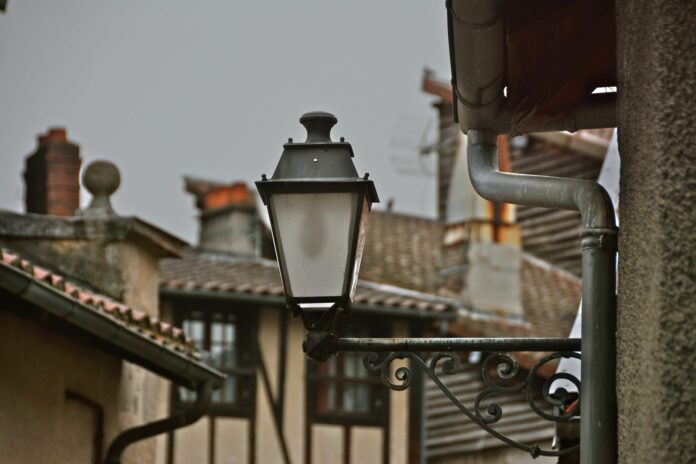
In the Alpes-Maritimes, the fight against light pollution is part of a long-term territorial strategy. Since 2019, the Alpes Azur Mercantour International Dark Sky Reserve has structured a public policy centered on public lighting renovation, energy sobriety, and the protection of the nocturnal environment.
The quality of the night sky is part of the heritage of the Alpes-Maritimes. This reality has been the foundation of an engaged public policy for several years. In 2019, the Alpes Azur Mercantour territory achieved the label of International Dark Sky Reserve. This international recognition distinguished an exceptional quality of the night sky. In 2025, only about twenty such reserves exist in the world.
This labeling marks a starting point. The department wants to act on the theme of public lighting. Light pollution is a major factor in the degradation of the night sky. It also affects ecosystems, energy consumption, and public spending.
The strategy is part of a continuity. The GREEN Deal structures the environmental approach. The SMART Deal introduces technological solutions adapted to public uses.
Starting in 2023, a program to renovate public lighting was launched. SICTIAM provided operational support. The initiative concerned the entire departmental territory with the objective of reducing light pollution and controlling energy with the transition to LEDs. This now widespread lighting system allows for a reduction in electricity consumption. The announced decrease ranges from 50 to 70%. The average lifespan reaches 100,000 hours. This longevity reduces maintenance operations. Replacement costs decrease. The return on investment is presented as rapid. Energy and maintenance savings offset the initial cost in a few years.
Environmental issues are also highlighted. Less electricity consumed means fewer CO₂ emissions. Directional lighting limits light flow towards the sky, which should benefit nocturnal biodiversity, especially insects and bats.
A Gradual Rollout on the Municipal Scale
The renovation relies on territorial dynamics. In 2019, only 19% of public lighting contributed to reducing light pollution. By the end of 2025, this share reaches 56%. Seventy-five municipalities are members of the International Dark Sky Reserve. This membership allows for consistent action at the territorial level.
The document provides a precise state of operations. More than 400 street lamps have been removed. More than half of the municipalities benefit from a complete renovation. In more than 80% of the municipalities, an extinction or power reduction is applied in the middle of the night.
The figures testify to the project’s scale. About 3,000 lighting points are renovated in eleven municipalities during the 2024-2025 period. Andon, Cuébris, Escragnolles, or Puget-Théniers are included in this list. Around 2,800 points are renovated in fourteen additional municipalities, including Ascros, Gars, or Gréolières. The 2025-2026 period concerns twenty-three municipalities. About 5,400 lighting points will need to be renovated in turn.
Some engaged municipalities are not part of the RICE. This openness expands the scope of action. The departmental plan mobilizes a budget of 20 million euros. The funding from the Alpes-Maritimes Department accounts for 12 million euros.
The technical benefits complete the overview. The quality of lighting evolves. The color temperature becomes adaptable. Intelligent control enables a refined management of uses. Compatibility with presence detection and remote management at the lighting point is integrated. Lighting is instantaneous. The constraints of old discharge lamps disappear.
The RICE as a Structuring Framework
The Alpes Azur Mercantour International Dark Sky Reserve covers 2,300 km². Seventy-five municipalities are concerned. The territory has more than 55,000 inhabitants. Over 3,000 stars are visible to the naked eye. In five years, more than 250 events have been organized. More than 25,000 people have been made aware.
The momentum is set to continue with the opening of the Département’s House of the Environment and Observation in Valberg. This facility aims to be a place dedicated to nature, culture, and astronomy. The national RICE Congress will be held from June 16 to 18, 2026, in Valberg. The seven French RICE and several European reserves are expected.
An extension ambition is also being studied. The targeted perimeter corresponds to the entire Mercantour National Park. The area would reach 3,700 km². Ninety-two municipalities would be concerned. About 70,000 inhabitants would live within this perimeter.
NicePremium is a free, independent local news outlet.
Help us keep going by supporting our work from €5 per month.


