
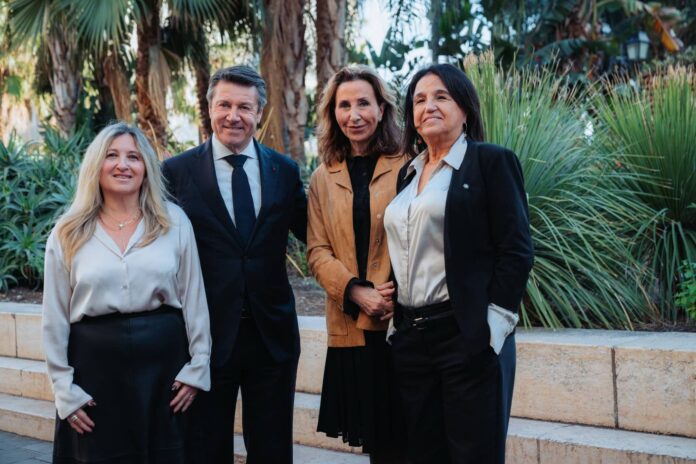
Campaigning for the 2026 municipal elections in Nice, Christian Estrosi presented the educational orientations featured in his campaign. These proposals are part of a strategy initiated since 2008 and aim to structure the municipal educational policy of the next term, in a context of demographic growth and an increase in the number of enrolled students.
Christian Estrosi outlined the main points of his educational project for the upcoming term. This presentation took place in a context of demographic growth and growing expectations for public services related to children. The outgoing mayor reminded that his mission extended beyond the management of school buildings. The objective was to offer suitable study conditions, a safe environment, and expanded access to cultural and extracurricular activities. The municipality also emphasized the importance of regulated nutrition and accessible support for families.
Nice has gained inhabitants during the last three censuses. The natural increase remained positive. This trend necessitated continuous adaptation of school infrastructures. Since 2008, the city claims to have implemented an educational policy structured around renovations, new constructions, and enhancing services offered to students.
A record marked by construction works, cultural actions, and inclusion measures
Municipal services highlighted the investments made in school buildings. One hundred and fifty schools had been affected by construction works since 2008, totaling 109 million euros. Several school complexes were expanded or modernized. Municipal workshops intervened annually for routine maintenance operations. Christian Estrosi also recalled the opening or extension of several institutions during the last term.
Adaptation to climate change was another aspect. Sixty million euros were devoted to the greening of schoolyards, replacing old boilers, installing misting devices, fans, and air conditioning in certain spaces. The city indicated it had favored solutions tailored to each school.
Inclusion has been one of the developed areas. The autism plan allowed the creation of specialized units in three schools. Inclusive leisure centers were established, as well as a center dedicated to the Château school.
School catering has been organized in-house since 2008. The central kitchen, inaugurated in 2019, produced 26,000 meals per day. Four hundred meals were intended for children with allergies. The capacity could reach 30,000 meals. Actions also focused on taste education and reducing food waste.
The “100% Culture in School” program allowed students to meet artists and discover various forms of creation. Other actions concerned citizenship, with the Niçois passport or workshops dedicated to republican values. Extracurricular time relied on a partnership with the CAF. Thirty-six leisure centers welcomed 2,500 children. The municipality announced the creation of a leisure center per school group.
The mayor thanked the elected officials involved in this work: Jean-Luc Gag, Pierre Fiori, Marie-Claire Lelouche, and Laurence Navalesi.
The next term will be based on consultations conducted with teachers, unions, and parent associations. The municipality cited the contribution of Hélène Fouassier, director of Rancher School in Gairaut.
The announced orientations will cover several areas. The teaching of English will be strengthened. The mayor stated that “speaking English today is a real necessity.” English activities are to be offered in public and private schools. An international school campus is set to open for middle and high school students interested in international pathways. Leisure centers will offer activities in English.
Access to culture will be facilitated through a “Nice Culture Schoolchildren” card. It will be automatically distributed to all students and will allow entry into libraries, media libraries, museums, concert halls, theaters, Animanice, and the Opera.
School infrastructures will evolve with the construction of four new public schools in Badinter, Nice Méridia, Bleuets, and Saint-Isidore. The head of the list promises an expansion of the Digue des Français school catering facilities with the restructuring of Aimé-Césaire and Saint-Isidore school groups.
Thermal protection will be the focus of a plan endowed with twenty million euros. A grant will be awarded to each school’s management to ensure classroom temperatures between 20°C and 25°C. The greening of schoolyards will continue.
An intergenerational solidarity mechanism called “Grandpas and Grandmas Homework” will support families. Paid retirees may help children with their homework. A platform is expected to launch in Animanice structures. The partnership with private education will be strengthened. The “100% Culture” scheme will be extended to private schools under contract.
The All for Nice list announced a resumption in the management of transport for school trips. A fleet of buses is expected to be created. A specialized team will be set up to prevent risks associated with screens, cyberbullying, and digital usage.
NicePremium is a free, independent local news outlet.
Help us keep going by supporting our work from €5 per month.


