
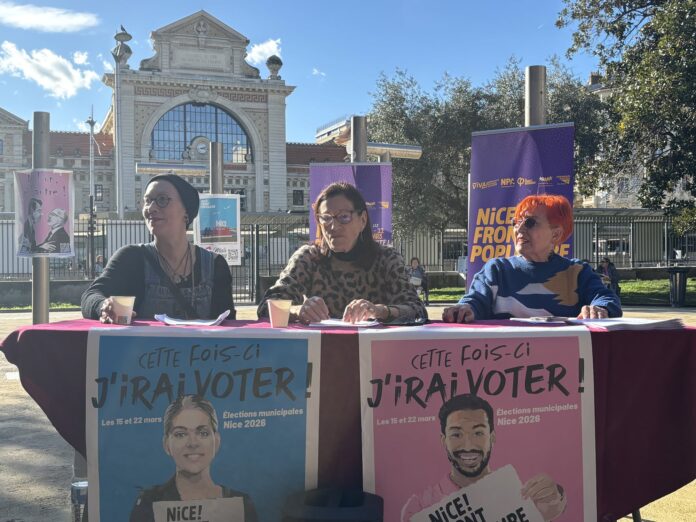
From free carnivals to the creation of community houses, the Nice Front Populaire list presented its cultural program on Wednesday, February 11. An ambitious project that aims to break away from « the politics of image » and to place culture at the heart of social bonds.
The Wednesday afternoon press conference, held outdoors, was dedicated to culture by the Nice Front Populaire list. Following the presentation of its recent ideas regarding free transportation, housing, natural risks, over-tourism, and grassroots democracy, the group unveiled a cultural project organized around two pillars: accessibility for all and artistic freedom.
« Culture is not just a luxury, an unnecessary expense, or a weekend pastime », the list leader states at the outset. « Our goal is to transition from an image-focused approach, characterized by red carpets and waste, to a human-centered approach. » Before presenting its suggestions, the group establishes a critical assessment of cultural policy in Nice. They highlight, in particular, the demolition of the National Theatre of Nice (TNN), the closure of MAMAC, the lack of immediate solutions following the disappearance of Acropolis, and the weakening of CIRM.
What some participants call « institutional vandalism » is denounced, lamenting decisions made « without prior assessment or proposed alternative ».
Another criticism: the perceived insufficient emphasis on the Niçoise language and culture. « Niçoise Occitan has been reduced to a folkloric aspect. » « We want to fully reintegrate it into the Niçoise community », they specify. According to the group, current budgets are being depleted by « temporary » policies to the detriment of libraries, conservatories, and neighborhood structures.
First pillar of the program: ensure local access to culture.
« Our approach is not to offer culture as a gift, but rather to remove the barriers that hinder access to it», details a team member. Stated goal: for «every resident, regardless of postal code, to access a public cultural service within 15 minutes of their home ».
The envisaged program includes: The creation of community houses, co-creation, and debate spaces open to residents, associations, and artists. The transformation of the 17 AnimaNice to host artist residencies. The creation of a center for scientific and technical culture. A «Nyssa Cultura » Pass to facilitate young people’s access to live performances. A sliding scale pricing at the conservatory. Free carnival for metropolitan residents. « Free carnival is not new to us. We’ve been proposing it for a long time », the list recalls. The list aims to strengthen the national Demos program (musical and orchestral education with a social purpose) by fully associating it with the Philharmonic Orchestra and Ballet of the Nice Opera. « Currently, a gap separates the city’s high-level artists from children in residential areas. » « It’s a real loss », laments a participant.
The ambitious project: establish symphonic orchestras in the Ariane, Moulins, and Pasteur areas, and integrate an innovative choreographic component in France through the Opera Ballet.
A declared political vision
Second point: recognition of cultural sector professionals.
The group criticizes the widespread precariousness and calls for a salary increase for cultural agents, artists working in schools, and opera staff.
They also aim to ensure artistic autonomy: « Art should be free from political pressure and subsidy blackmail. » Some cultural associations have reportedly refused to be mentioned in the program « for fear of losing their subsidies ». To fund these initiatives, the program mentions a « transparency audit » regarding the costs of the MAMAC, TNN, and Opera projects, as well as reducing the budgets for communication and events deemed too large. « It’s not about spending more, but spending better. » The program also includes an ecological component, aiming to make Nice a «European laboratory for sustainable scenography » and to break with «the disposable cycle ».
The conference concluded with a reading of a passage from the book The Rights of the Dream by Gabriel Monnet, former director of the Maison de la Culture in Bourges. Subsequently, the audience attended a dynamic interpretation of the song «Assez dommage» by Bigflo and Oli.
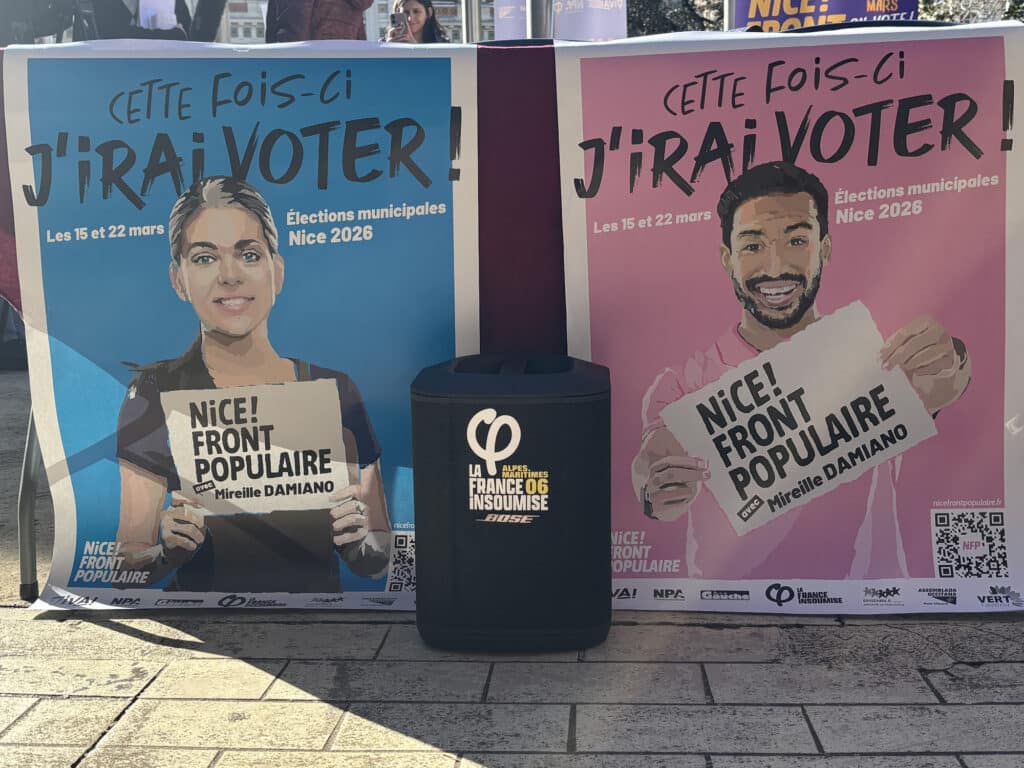
In a version adapted to local dialects, the lyrics notably referred to: « It is difficult to find housing with minimum wage », «Nice is rusted, stuck in dramas, we are left to choose between the plague and cholera. » A musical nod to « encourage voting » and to inscribe culture at the heart of political struggle. « These are not promises, but a real cultural restoration plan », concludes Mireille Damiano.
NicePremium is a free, independent local news outlet.
Help us keep going by supporting our work from €5 per month.


