
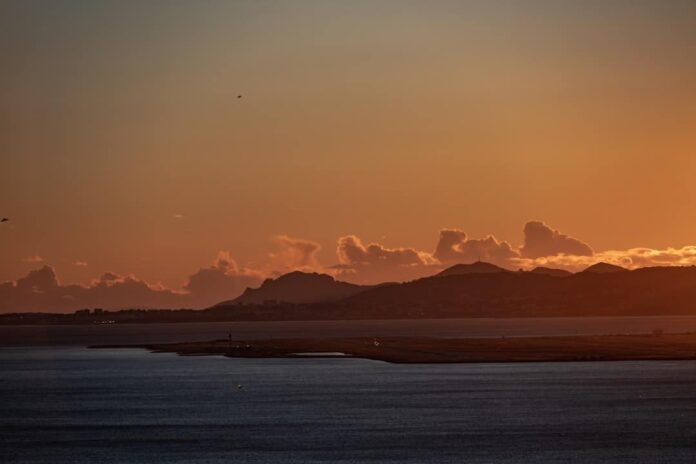
There are cities that spontaneously inspire you to take out a camera.
Nice is one of them.
The morning light on the Promenade des Anglais, the colorful facades of Old Nice, the narrow shadows of the alleyways, the blue of the Mediterranean, market scenes or simply silhouettes crossing a square: the city constantly offers changes in colors, contrasts and rhythms.
A few weeks before the official launch of the Bicentennial of Photography in France, which will run from September 1, 2026 to September 30, 2027, summer offers a fine opportunity to look at Nice differently.
Not necessarily with a professional camera.
Simply by taking more time to see.
## 200 years of photography: an anniversary that begins in September
In 2026, photography officially celebrates its two centuries.
The French Ministry of Culture has chosen to make this anniversary a national and international celebration, centered around contemporary creation, public collections, publishing and photographic heritage.
The historical starting point chosen is 1826, the year when Nicéphore Niépce created the famous *View from Le Gras* in Burgundy, considered the oldest surviving photograph.
Two centuries later, photography obviously has little in common with the long exposures of the pioneers.
A smartphone is now enough to produce hundreds of images in just a few hours.
But this ease perhaps raises another question: by photographing everything, do we still take time to really look?
In Nice, the answer can begin in the street.
## The Charles Nègre Photography Museum at the heart of Nice’s summer
To talk about photography in Nice, it’s hard not to start with the Charles Nègre Photography Museum, just steps away from Cours Saleya.
This summer of 2026, the museum is notably hosting *Levitation*, the first museum retrospective devoted to the work of Mathieu Forget. Through 80 photographs, the artist explores movement and that strange impression of suspension that characterizes much of his visual universe.
In the museum gallery, another exhibition has an even more direct relationship with the city.
### “La Dolce Nizza”, Nice in black and white
With *La Dolce Nizza*, Claudia Bevilacqua offers until September 6 a black and white vision of a sunny, theatrical and cinematic Nice.
The title already says a lot.
It’s not simply about documenting the city, but about constructing an atmosphere: characters, attitudes, a certain Mediterranean sensuality and the impression that the street can sometimes become a stage.
The exhibition also offers an interesting clue for amateur photographers: you can photograph a place you know a thousand times and still manage to look at it differently.
## The Côte d’Azur, natural territory of the image
The relationship between the Côte d’Azur and the visual arts obviously doesn’t begin with Instagram.
For a long time, Mediterranean light has attracted painters, filmmakers, photographers and creators.
Matisse is probably one of the most famous examples. Settled in Nice for much of his life, he develops a very particular relationship with light and color there.
The Matisse Museum, in Cimiez, still allows us today to understand this relationship between a territory and the way an artist learns to look at it.
Photography asks essentially a similar question.
Why do two people placed in exactly the same place never produce quite the same image?
Because a photograph is not only what stands before the lens. It also depends on what the photographer decides to retain, exclude, wait for or put into relationship.
## Martin Parr: looking differently at holidays and the seaside
It’s impossible to reflect on the photography of leisure and seaside resorts without mentioning Martin Parr.
The British photographer, a Magnum member for several decades, built part of his work around daily behavior, tourism, consumption and holidays.
His book *The Last Resort*, made in the 1980s in New Brighton, England, became one of his most famous works.
Saturated colors, bodies on the beach, food, crowds, children, ordinary objects: Parr photographs what many would once have considered too banal to deserve an image.
And that is precisely where his gaze becomes interesting from the perspective of the Côte d’Azur.
Nice obviously has a very different aesthetic from that of New Brighton. But you find the same photographic materials there: tourists and residents cross paths, beaches become social theaters, luxury rubs shoulders with the everyday, and postcard images coexist with much more ordinary scenes.
Looking at the Promenade with Martin Parr’s spirit doesn’t mean imitating him.
It rather consists of looking at what happens around the setting.
## Street photography begins by slowing down
There’s no need to go far to do photography.
A stroll through Old Nice is enough.
But sometimes you have to change pace.
Pass through a street early in the morning when it’s still almost empty. Wait for someone to cross a beam of light. Observe a conversation on a terrace. Look at how a shadow cuts across a facade.
Street photography depends greatly on this availability.
A good image isn’t necessarily one of a spectacular monument. It can be born from a gesture, a color that responds to another, a reflection in a shop window or a character who enters for a second into a composition.
That’s also what makes Nice interesting: the city offers immediately recognizable settings, but the challenge is precisely not to always produce the same photograph.
## A few places to photograph Nice differently
The Promenade des Anglais remains essential, but approaching it early in the morning completely changes the image: fewer crowds, lower light and more legible silhouettes.
In Old Nice, the narrow streets allow you to play with contrasts between shadow and light.
Around the port, boats, colorful facades, passersby and daily activities give a more graphic and sometimes more documentary photograph.
Cimiez offers a different rhythm: gardens, architecture, heritage and vegetation allow you to work on calmer compositions.
And to gain height, Castle Hill remains one of the privileged points for visually understanding the organization of the bay.
The place matters, but the time often matters more.
## At Villa Arson, photography remains also a tool for creation
High above Nice, Villa Arson also maintains a concrete link with contemporary photographic practice.
Its national school of fine arts has in particular a complete photographic workshop, combining analog and digital practices: medium and large format cameras, black and white darkroom, studio, digital equipment and image processing tools.
Photography is thus considered not only as a means of documenting reality, but as an artistic language among others.
This diversity well reflects what photography has become after two centuries of existence: photojournalism, contemporary art, portraiture, street photography, fashion, landscape, experimentation or simply daily practice.
## Three books to learn to look differently
Photography isn’t learned only with a camera.
A few books can profoundly change the way we look at images.
In *On Photography*, Susan Sontag notably questions our need to transform the world into images and the power that photography takes on in our relationship to events.
Roland Barthes, in *Camera Lucida*, is more interested in the intimate experience of the viewer: why do certain photographs leave us indifferent while others affect us immediately?
Finally, *Ways of Seeing* by John Berger — known in French as *Voir le voir* — goes beyond the photographic domain alone to reflect on how images, art history, advertising and social relations construct our gaze.
Three very different approaches, but the same invitation: don’t just see an image, try to understand why it works.
## Nice, an open-air training ground
The bicentennial of photography will be an opportunity, starting in September, to revisit two centuries of image history.
But in Nice, you don’t need to wait for a commemoration to begin.
You just have to go out.
Take a street you walk every day and try to spot something there you had never really looked at. Photograph less, but wait more. Be interested in people as much as in landscapes. Return to the same place at another time.
And also accept not taking the photo.
Because behind two centuries of technical developments, from Niépce’s first plates to today’s smartphones, photography ultimately retains something very simple: it always begins with a gaze.
Under the light of Nice, the training ground is almost infinite.
—
There are cities that seem to have been created to be photographed. Nice is one of them. Low-angle light on the Promenade des Anglais, striking contrasts between the ochre facades of Old Nice and the deep blue of the Mediterranean, weathered faces of the fishermen of the Cours Saleya market — every corner of the street is an invitation to pause, to observe, to remember. In this summer of 2026, as photography celebrates its bicentenary on a national scale with a series of tributes in major French institutions, it’s natural to wonder how this city of light lives, breathes and cultivates this art that resembles it so much.
## A city bathed in photographer’s light
The great masters of the lens understood this before anyone else. From pioneers to contemporaries, the Côte d’Azur has always exerted a magnetic attraction on those seeking to capture the essence of the visible world. It’s no coincidence that Henri Cartier-Bresson, the tutary figure of humanist photojournalism and co-founder of the Magnum Photos agency in 1947, regularly returned to these shores to rediscover a certain idea of photographic grace. His work, based on the concept of the decisive moment — that fraction of a second when form and meaning perfectly coincide — still resonates today in every photography workshop in the region.
Édouard Boubat, another giant of twentieth-century French photography, cultivated a poetry of the everyday that finds a natural echo in the Nice alleyways. His images, carried by a rare tenderness for human beings caught in their simplest gestures, remind us that great photography is never a matter of sophisticated equipment, but always of attention paid to the world. A lesson that contemporary Nice photographers have not forgotten.
## Martin Parr and color as aesthetic commitment
If we had to choose a photographer whose critical and joyful eye speaks particularly to our image-saturated era, it would probably be Martin Parr. This iconoclastic Briton, a Magnum member since 1994, built an entire body of work around saturated color, assumed kitsch and a gaze that is both affectionate and unsparing toward Western consumer societies. His photographic series on seaside resorts — where tanned tourists, melting ice creams and gaudy beach umbrellas form a human geography of savory irony — could almost have been taken on the beaches of the Côte d’Azur.
Studying Parr’s work from Nice is like looking at yourself in a slightly distorting, and therefore revealing, mirror. The Riviera, with its mixture of ostentatious luxury, mass tourism and absolute natural beauty, is precisely the territory this photographer loves to dissect with tenderness. His collection *The Last Resort*, published in 1986, remains an essential reference for anyone interested in the photographic representation of the seaside and popular leisure.
## Nice, its museums and visual memory
The city has several museum institutions that maintain a strong relationship with visual representation and image. The MAMAC — Museum of Modern and Contemporary Art — houses in its permanent collections works that question our relationship to sight and representation. The proponents of the Nice School, an essential artistic movement of the 1960s and 1970s, had precisely placed the question of visual perception at the heart of their approach. Yves Klein and his fields of international blue, Ben Vautier and his word-images, the New Realists with their subversion of everyday objects: so many artistic gestures that dialogue with what photography, at the same time, was attempting to accomplish.
The Matisse Museum, nestled in the Villa of the Arenas in the heart of the Cimiez district, reminds us that Nice was the laboratory for one of the greatest chromatic revolutions of Western art. Henri Matisse, who lived and worked in Nice for many years, developed here this relationship to Mediterranean light that still illuminates his canvases. Understanding Matisse from Nice is understanding how geography can transform an artist — and how an artist can transform the way we see geography.
## Wandering as method: seeing the city differently
There is an intellectual and artistic tradition of walking as a creative act. From the Situationists who roamed Paris in search of psychogeographic drifts to contemporary photographers who traverse cities with their cameras to capture what the hurried eye no longer sees, slowness is a form of aesthetic resistance. In Nice, this practice of attentive wandering takes on a particular dimension.
Getting lost in the narrow streets of Old Nice in the early morning, before the tourist flow erases the daily life of residents, is to access another city — more secret, more authentic. Amateur and professional photographers alike know this: the best images are rarely found where you expect them. They emerge from a detour, a hesitation, a shadow cast on a pink wall. This availability to the world, this sensory openness that street photography requires, is also what travel and wandering literature seeks to convey at its best.
### Learning to look: photography workshops and training
For those wishing to sharpen their gaze, the Côte d’Azur offers fertile ground. Many photography practice workshops are offered throughout the year by cultural associations and independent galleries, allowing both amateurs and initiates to deepen their knowledge of techniques — from composition to natural light, from portraiture to landscape photography. These learning spaces are also places of meeting and exchange around a shared passion for image.
Villa Arson, a national school of fine arts nestled in the hills of Nice, has trained young artists for decades, some of whom make photography or video their main medium of expression. Its Brutalist architecture, its terraced gardens and its anchoring in the most demanding contemporary creation make it an essential location for anyone interested in the avant-garde art of the region.
## Reading to see better: essential books on photography
To extend this reflection on the image beyond gallery walls, a few works stand out as absolute references. *On Photography* by Susan Sontag, published in 1977, remains the foundational essay on our cultural and philosophical relationship to the photographic image. *Camera Lucida* by Roland Barthes, published in 1980, explores with moving sensitivity what photography does to those who look at it — and to those it represents. More recently, *Ways of Seeing* by John Berger, translated into French as *Voir le voir*, continues to nourish the thinking of all those interested in the social and political conditions of visual representation.
These three books form an ideal trilogy for any image lover who wishes to go beyond the pleasure of contemplation to achieve an intelligence of sight.
## Conclusion: Nice, laboratory of Mediterranean sight
In this summer of 2026, as photography celebrates its two centuries of existence with the enthusiasm and nostalgia that characterize great anniversaries, Nice appears as a privileged observation point of this art of sight. City of light, city of colors, city of social and aesthetic contrasts, it offers to those who know how to pause material of infinite richness.
Whether you are an experienced photographer or a simple curious stroller, we invite you to rediscover your city — or discover it for the first time — with wide-open eyes. Visit the permanent collections of our museums, leaf through the great classics of photographic literature, and let yourself be guided by this unique Mediterranean light that has made the Côte d’Azur one of the most photographed — and most inspiring — territories in the world.
NicePremium is a free, independent local news outlet.
Help us keep going by supporting our work from €5 per month.


