
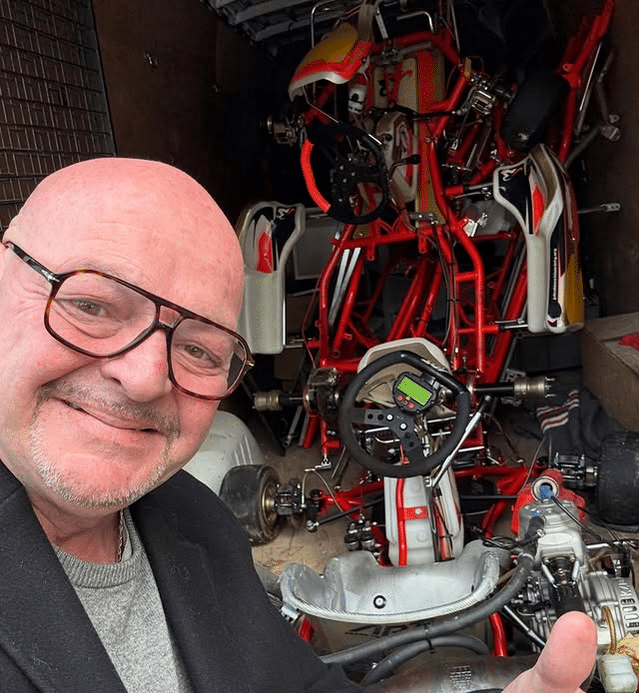
A burglary that occurred in early January 2026 in Le Val, in the Var region, targeted the family of Jules Bianchi. Items related to the early sporting years of the driver were stolen. After a widely relayed public appeal, Jules’s last kart was found. Other items, essential to his personal and sporting memory, are still missing.
During the night of Monday, January 5 to Tuesday, January 6, 2026, a garage belonging to the Bianchi family was burglarized in Le Val, in the Var region. Several items linked to Jules Bianchi’s career were stolen. Among them were karts, chassis, and a small motorcycle. These items related to the driver’s early years of practice. The family quickly chose to make the matter public. An appeal was launched to try to recover these items.
This appeal emphasized a central point. The stolen items were not about financial gain but had an emotional dimension. Jules Bianchi, born in Nice, died at the age of 25 after an accident during the 2014 Japanese Grand Prix. The young race car driver grew up in Brignoles, in the Var region. Karting marked the beginning of his sporting journey. The stolen items were part of this foundational period.
The statement sought to distinguish the burglary as a random incident from what it truly represented for the family: “it’s not the burglary itself, it happens to everyone, but here, there is this very emotional and sentimental side that makes us want to get these items back,” testified his father, Philippe Bianchi.
Found items
A few days later, a first return was communicated. Jules Bianchi’s family announced that the last kart used by Jules had been found. This recovery is a great relief, but the damage remains, as several historically and emotionally significant items are still missing.
This recovery does not yet close the wound. Several essential items, witnesses of Jules’s beginnings and trajectory, are still missing. Elements deeply connected to his personal history and memory remain undetectable today.
To date, missing are several chassis marked JB17, baby karts belonging to Jules, and the small motorcycle he learned with. This item is presented as deeply symbolic. This motorcycle belonged to his sister. This learning experience marks Jules’s very first steps in motorsport.
These items have no real market value. They are identifiable, traceable, and unusable. Their emotional and memorial value is of course priceless. These elements are an integral part of Jules’s personal and sporting history. The partial return thus does not allow for the reconstruction of this set.
The Bianchi family wished to publicly thank those involved. The Brignoles Gendarmerie is cited for its commitment and work. The media that relayed the appeal respectfully are also mentioned, as well as all the mobilized people who showed humanity, vigilance, and solidarity.
This mobilization has already allowed for an initial progress. It proves that together, action is possible. However, Jules’s memory remains incomplete today. The family, therefore, renews an appeal for the return of the still missing items. It is still time to make amends. Placing these elements in a location that allows their return to the family would be a strong, responsible, and deeply human gesture.
Jules Bianchi remains a respected figure in motorsport, a symbol of courage, effort, and legacy. His memory deserves to be protected. The Bianchi family, his loved ones, and all those who hold Jules in their hearts will not give up.


