
The Government has formalized its decisions on the future of the orcas and dolphins at Marineland in Antibes. The choice of sanctuaries is confirmed. The park management denounces an urgent situation and demands immediate transfers abroad.
The Ministry of Ecological Transition has made public the decisions regarding the future of the cetaceans still present at Marineland. This announcement marks a new stage after several months of technical analyses, inspections, and exchanges with experts. The objective is focused on animal welfare, safety, and compliance with French law.
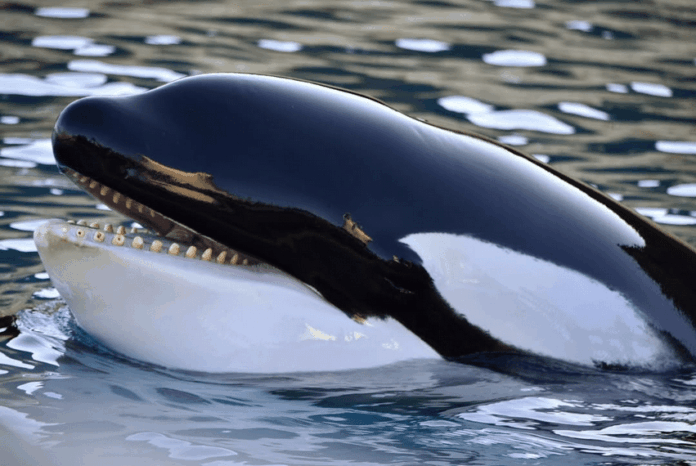
The state’s position is now formalized. The two orcas from the park are intended to join the Whale Sanctuary Project, a marine sanctuary located in Nova Scotia, Canada. The transfer is planned for summer 2026. The ministry recalls that the Spanish scientific authority refused a transfer to Loro Parque in Tenerife. The Government also considers that continued exploitation of the orcas for entertainment purposes would not be acceptable under current legislation.
For the dolphins, the approach is different but equally firm. No transfer to Spain is selected. This option is deemed insufficient in terms of animal welfare guarantees. The risk of commercial exploitation contrary to the spirit of the 2021 law is also highlighted. The dolphins will therefore temporarily remain in Antibes. The pools are considered compatible for temporary accommodation. This period should allow for the opening of the future center led by the ZooParc de Beauval.
The announced decisions are based on inspections by the DREAL (Regional Directorate for Environment, Planning and Housing, Editor’s Note), scientific expertise, and a clearly presented legislative framework. The ministry also mentions the situation of the caregivers. A continuity of activity is announced, notably through the Beauval project. The ministry specifies that the next administrative steps will be conducted with state services, the scientific community, NGOs, and the site operator.
Mathieu Lefèvre, Delegate Minister in charge of Ecological Transition, supports this direction. “The State acts responsibly and consistently. After considering all options, we are taking the necessary decisions today to ensure the well-being of the animals. The dolphins will not go to Spain, where they could be exploited again. As for the orcas, their place is at the Nova Scotia sanctuary: it is the only ethical, credible, and legally compliant solution. Our role is to protect these animals and lay the foundation for an exemplary model of transition to marine sanctuaries.”
Marineland denounces a “critical urgency”
These announcements have not eased tensions. The management of Marineland responded via a statement. The park denounces a situation it considers critical. The management speaks of an “imminent danger of death” for the animals. The request is clear. Immediate transfers to European facilities are demanded.
The standoff is intensifying over the two orcas and twelve dolphins still present at the Antibes site. The park’s management criticizes the government’s position. The announced choices are described as irresponsible. Marineland claims that “the animals can no longer wait.” The park calls on the State to “give priority to animal welfare.”
The management claims to have proposed immediately available solutions for several years. These solutions are said to be supported by “the scientific community, international associations, and applicable regulations.” Concerning the orcas Wikie and Keijo, the tone is alarming. “The situation is extremely urgent,” writes Marineland. The park mentions a risk of the pools collapsing “at any moment”, which would “result in the death of the animals.”
According to the management, authorized and operational facilities could quickly accommodate the two orcas. These structures would allow integration into existing social groups. The Canadian project is, on the contrary, presented as a “hypothetical and nonexistent solution.” The lack of a specific timetable and concrete guarantees is highlighted. “Waiting any longer puts the animals’ lives in immediate danger of death,” insists the statement. Marineland claims to have been attempting to obtain a transfer permit for three years.
The situation of the dolphins is described as equally problematic. The park believes it is no longer able to keep the twelve animals. The arguments presented concern animal welfare, but also social, legal, and security aspects. Marineland claims that two authorized facilities in Spain are ready to accommodate the dolphins. The Spanish authorities have reportedly given their approval. “There is no reason to wait,” asserts the management, calling on the State to authorize the transfers “as soon as possible.”


