
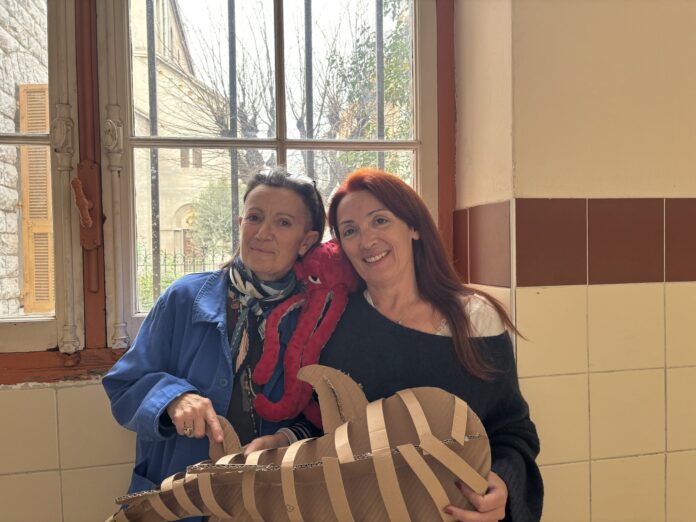
Ground graffiti, recycled sculptures, and civic engagement: at Joseph Vernier Middle School, twenty-five 9th-grade students are taking action to combat waste pollution, as part of the educational contest Océano pour Tous, led by the Oceanographic Institute of Monaco.
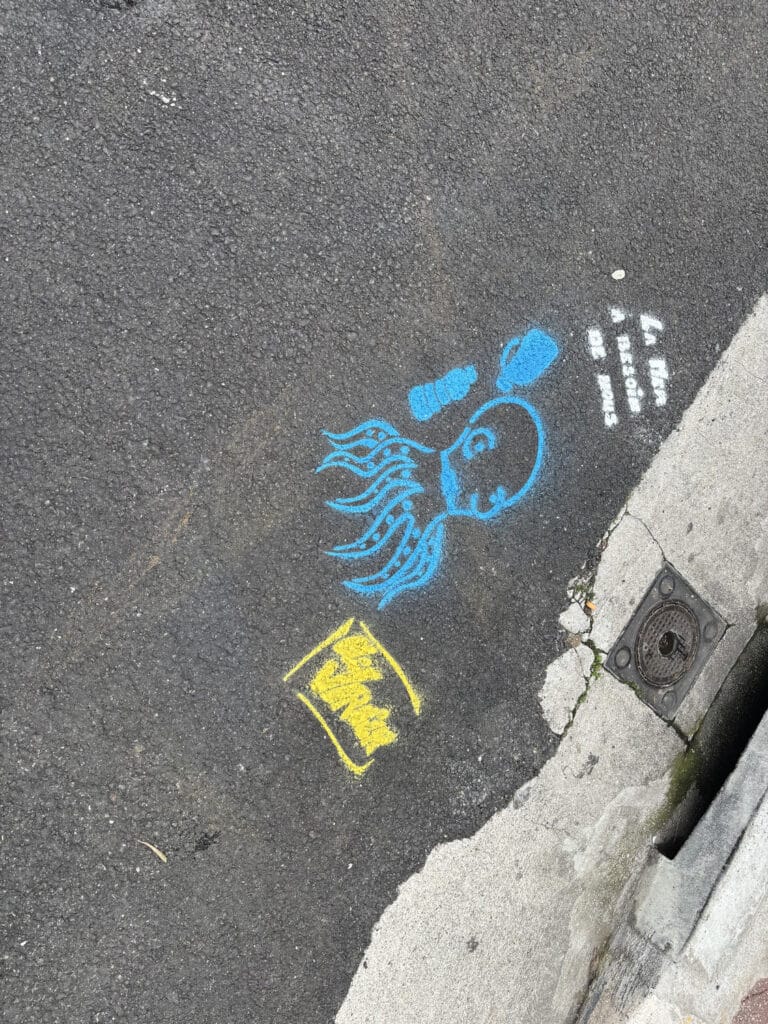
On Thursday, February 5, from 1:30 to 4:30 pm, the surroundings of Joseph Vernier Middle School, located in a priority education area in Nice, were transformed into a true space for ecocitizen expression. Twenty-five 9th-grade students mobilized to raise awareness among passersby about the fate of waste abandoned in public spaces and its impact on the Ocean. This artistic initiative is part of the educational contest “Océano pour Tous”, organized by the Oceanographic Institute of Monaco and sponsored by Estelle Lefébure. It’s an ambitious project aimed at making students active participants in environmental protection while giving meaning to their academic learning. The students used sidewalks, storm drains, and the areas around trash cans to capture public attention by applying colorful stencils, encouraging messages, and stylized representations of marine animals. The intention is clear: to demonstrate that litter left on the ground doesn’t just vanish but often ends up in rivers… and eventually in the Ocean.
“The goal is to involve them in a protective commitment,” explains their Science and Earth Life teacher as well as their homeroom teacher, Mrs. Descamps. “Initially, we focused on raising awareness, and now they are committed to taking action to raise public awareness in front of the school and throughout the neighborhood.” Additionally, the students are also participating in the Cordées de la Réussite program, with a collaborative scientific project in association with the IMEF of Villefranche-sur-Mer. Notably, they have set up a floater to collect data and understand how the Ocean evolves in response to climate change.
Supported by the Oceanographic Institute of Monaco, the school’s students received scientific and educational support throughout the year: online workshops, presentations by mediators, a visit to the Oceanographic Museum of Monaco…
“Only a few students had previously visited Monaco or this museum. They were thrilled,” reveals the teacher, Mrs. Descamps. “They were also greatly affected by the exhibition on the future of the Ocean.” They declared: “We do not want that kind of Ocean.”
The project encompasses several disciplines: French, science, languages, and visual arts. “It’s a multidisciplinary project that gives meaning to learning and even school attendance,” the teacher highlights.
Recycling to Better Protect the Ocean
In the classroom, other creations are taking shape: giant sculptures of turtles, whales, octopuses… made from newspaper and recycled plastics. Zoé, 13 years old, participates enthusiastically. “The aim is to show people how we can reuse objects that we uselessly discard,” she explains.
Since the beginning of the project, her perspective has changed: “I know I can do many great things with objects I thought were useless.” When asked what message she wishes to convey to other children, Zoé answers without hesitation:
“We mustn’t throw garbage on the ground. Imagine you are animals in nature: the only thing you can eat is old waste.” Beyond this one-time initiative, the project is designed to be sustainable. As part of the “Océano pour Tous” contest, students must produce a five-minute video report illustrating their participation. This work will continue until June, with public presentations and a scientific forum.
“It’s our mission to spread the message,” concludes the teacher. “If the message is understood, it’s perfect. But above all, the students feel involved, and that’s essential.”
These actions encourage an entire neighborhood, if not more, to consider its daily actions. A demonstration that environmental commitment can also emerge close to home.


