
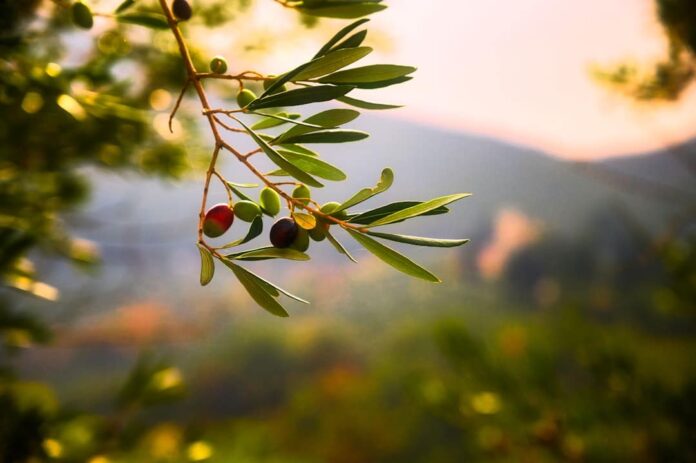
With its hot summers, intense light and relatively mild winters on the coast, Nice offers particularly favorable conditions for many Mediterranean gardens.
But gardening on the Côte d’Azur no longer simply means seeking a postcard image made up of olive trees, lavender and bougainvilleas.
With more frequent heat episodes and a water resource that must be used with greater caution, the Côte d’Azur garden benefits from being thought of differently: choosing suitable plants, working the soil, limiting evaporation and accepting that a beautiful Mediterranean garden is not necessarily one that is abundantly watered.
Terrace, balcony, small garden or terraced land: a few simple principles allow you to create an outdoor space that is both aesthetic and more consistent with the local climate.
The Mediterranean garden begins with choosing the right plants
The principle seems obvious, but it remains essential: a plant adapted to its environment will generally require fewer interventions than a species that you try to maintain artificially in conditions that don’t suit it.
ADEME thus recommends favoring plants capable of better withstanding drought and heat periods, in order to limit watering needs.
On the Côte d’Azur, this opens up considerable choice.
Olive, rosemary, lavender: the great classics
The olive tree obviously remains one of the symbols of the Mediterranean landscape.
Once well established, it tolerates dry periods well, provided it has sufficiently draining soil. In a pot, its needs are different: the volume of soil is limited and watering must therefore be monitored more carefully than in open ground.
Rosemary and lavender are also particularly interesting for dry, sunny gardens.
They generally appreciate draining soils and tolerate drought better once established than many ornamental plants that are thirsty for water. Their flowering also provides interesting resources for various pollinators.
The idea is not to plant exclusively three species everywhere.
A successful Mediterranean garden is also based on diversity.
Bougainvillea: spectacular, but to be reserved for suitable situations
It is difficult to imagine certain Mediterranean facades without bougainvillea.
In the mildest and best exposed sectors of the coast, it can offer very long flowering. It appreciates full sun, well-drained soils and becomes relatively resistant to drought once properly established.
But it remains sensitive to frost.
In Nice, exposure therefore matters a lot: a protected south-facing wall does not present the same conditions as a very wind-exposed terrace or a garden located higher inland.
This is a good example of a rule that applies to almost all plants: talking about “Mediterranean climate” is not enough. Each garden has its own microclimate.
Cistus, pittosporums and sculptural plants
To vary the shapes, cistus constitutes a particularly interesting option in dry, rocky gardens.
Pittosporums can add volume and evergreen foliage, while various euphorbias and succulent plants allow you to play with much more graphic silhouettes.
Agaves can also produce very beautiful effects in contemporary gardens, but their choice must take into account the available space and their sometimes very spiky leaves, especially near walkways.
The search for a Mediterranean garden is therefore not about accumulating “exotic” plants, but about creating a coherent ensemble with the space, soil and exposure.
And aromatic plants?
Thyme, rosemary, sage and oregano naturally have their place in a Côte d’Azur garden.
They combine culinary interest, fragrance and decorative qualities.
Basil and mint, on the other hand, require a bit more attention. They should not be automatically placed in the same category as dry-ground plants: depending on their location and pot cultivation, their water needs can be substantially greater.
On a Nice balcony, the most interesting option might be to create several small spaces: sun-resistant aromatics on one side, plants requiring more coolness in an area with some shade.
The first question to ask yourself: where is the sun?
Before even choosing your plants, you must observe.
How many hours of direct sunlight does the garden receive? At what time of day? Does the soil dry very quickly? Is the terrace exposed to wind? Are there areas that remain naturally cooler?
In Nice, two balconies located on the same street can offer very different conditions depending on their orientation.
A south-facing terrace on the top floor will not have the same needs as a small garden protected behind stone walls.
This prior observation prevents many mistakes and above all avoids having to compensate for a poor plant choice with constant watering.
Water becomes a central element of the project
On the Côte d’Azur, designing a garden today also means thinking about its water consumption.
Drought orders in the Alpes-Maritimes can provide, depending on the alert level, hourly limitations or even watering bans for certain green spaces. Water-saving systems such as drip irrigation may benefit from different rules depending on situations.
It is therefore useful to check the restrictions in force before watering in the summer period.
But independent of restrictions, several good practices allow you to naturally reduce needs.
Drip irrigation rather than general watering
ADEME recommends automatic drip irrigation as a means of distributing water directly and gradually to plants, without unnecessarily watering large surfaces.
This does not mean that an automatic system must operate every day.
The frequency depends on the type of plant, soil, age, weather and location.
A well-established olive tree in open ground and basil in a pot on a hot terrace obviously do not have the same needs.
When watering manually, early morning or evening also helps limit some evaporation compared to the hottest hours.
Mulching, a simple and effective gesture
Mulching is probably one of the easiest gestures to implement.
Dead leaves, wood chips, shavings or other organic matter can protect the soil surface.
ADEME emphasizes that this cover helps retain moisture longer, reduces watering needs and limits weeding.
In a Mediterranean garden, the soil does not necessarily need to remain bare between plants.
This cover can also help give the bed a more natural appearance, provided you choose mulch suited to the plants installed.
Collecting rainwater when possible
Even in a region characterized by long dry periods, rainy episodes can be intense.
Collecting some of the water from a roof allows you to have a small reserve for certain garden uses.
This will obviously not replace overall watering management, but can be an interesting supplement, particularly for young plantings or potted crops.
In condominiums and urban settings, installation must naturally take into account technical constraints and building regulations.
Thinking of the garden in layers
The terrain of Nice and the hinterland lend themselves particularly well to gardens organized on multiple levels.
The old terraces offer a very Mediterranean example of this adaptation to the land.
Even on a small surface, you can apply the principle by superimposing different heights: a tree or large shrub for structure, lower shrubs, then aromatic plants and ground covers.
This organization allows you to add relief without necessarily multiplying the species.
And when one plant provides shade to another, it can also create a locally more favorable environment for certain vegetation less resistant to full sun.
Stone, terracotta and wood: accompanying rather than decorating
A Mediterranean garden depends not only on plants.
Natural stone, terracotta, gravel or certain woods can accompany vegetation and create circulation or rest areas.
But here too, it’s better to avoid ready-made recipes.
A large mineral surface exposed to full sun can store a lot of heat. The choice of materials and their quantity must therefore be thought out with summer comfort in mind, not solely aesthetics.
In Nice, the goal can be to seek a balance between vegetation, shade and mineral surfaces rather than transforming the garden into an entirely paved terrace surrounded by a few plants.
The garden becomes a true summer room
When the climate allows, the outdoor space can become a natural extension of the house.
A shaded table, a few seats, a vegetated pergola or a reading corner are sometimes enough.
The vegetation then plays an essential role.
A trellis, jasmine or another suitable climbing plant can filter light and create a more pleasant atmosphere than a fully sun-exposed area.
In the evening, subtle lighting is generally sufficient.
A few light points directed toward pathways or certain plants create a softer ambiance than general illumination, while limiting light pollution.
August, a time to observe rather than plant everything
In the middle of summer, the desire to transform your garden can be strong.
Yet August is not necessarily the ideal time to multiply new open ground plantings, particularly during heat episodes.
It is, however, an excellent time to observe your space.
Identify areas that burn in the sun. Identify those that remain cool. See which plants resist best. Note where water runs off after a storm and where it disappears immediately.
This information will be precious when more favorable planting conditions return.
In the Mediterranean climate, autumn can indeed offer an interesting period for installing many plants: the soil remains relatively warm while water demand decreases gradually.
A Nice garden does not need to be perfect
The most interesting Mediterranean garden may not be one that remains green and flowering twelve months a year.
It is one that accepts the seasons.
Some plants flower in spring then become more discreet in summer. Others take over when heat sets in. Silvery leaves, dry grasses and the silhouettes of shrubs can be just as interesting as spectacular flowering.
Creating a garden in Nice is therefore less about fighting the climate than working with it.
Choosing suitable plants, protecting the soil, using water discerningly and observing before intervening.
And when autumn comes, plant what summer will have taught us to choose.
NicePremium is a free, independent local news outlet.
Help us keep going by supporting our work from €5 per month.


