
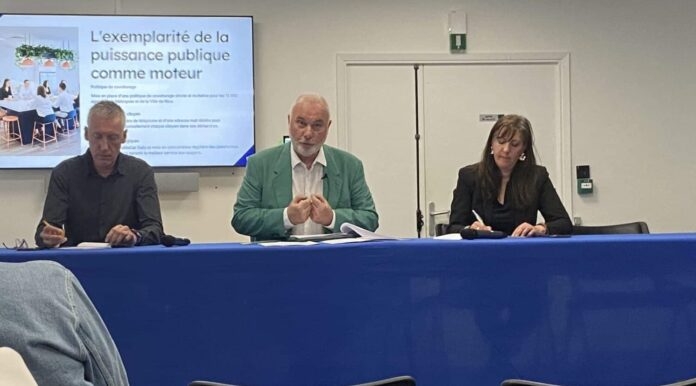
The city of Nice and the Metropole presented new measures this Tuesday to encourage carpooling. During a press briefing held at the Nice City Hall, Deputy Mayor Jean-Marc Governatori detailed several actions aimed at developing this practice in the area.
While carpooling has gradually developed over recent years in France, it remains little practiced in the Nice metropolis. According to figures presented by Jean-Marc Governatori, about 330,000 vehicles are registered in the area. Among them, 250,000 are on the road daily, and 180,000 drive with only one person aboard. “Every day, 180,000 cars drive alone, whereas carpooling could reduce traffic jams and improve residents’ purchasing power,” he emphasized.
According to him, the city is lagging behind in this area. The carpooling platform BlaBlaCar ranks Nice in 26th place among French cities in terms of carpooling practice. The municipality’s clear goal is to encourage “at least 10% of solo drivers” to share their journeys. Such a shift could save nearly 30,000 tons of CO₂ annually.
Jean-Marc Governatori: “develop the culture of cooperation”
To achieve this goal, the metropolis plans intensive groundwork. It aims to directly involve companies, residential communities, sports clubs, and neighborhoods in simplifying the organization of shared trips. The idea is to create carpooling coordinators within these structures. These coordinators could manage trips among colleagues or neighbors via dedicated WhatsApp groups. “Small actions can change habits. Sometimes, all it takes is one motivated person in an organization to initiate momentum,” the official noted.
Beyond practical aspects, the deputy mayor stressed the need for behavioral changes. “Carpooling is not just a tool for saving fuel or reducing traffic. It is also a way to foster a culture of cooperation,” said Jean-Marc Governatori.
Existing but underutilized applications
The metropolis is already working with the work-home carpooling application BlaBlaCar Daily, implemented in the area since 2022. It allows drivers and passengers to easily find regular trips and benefit from financial aid for shared journeys.
However, this tool remains largely underutilized. The current agreement with the platform is set to expire by the end of the year and could be opened to competition from other services like the Karos app, already used by several communities. Additionally, a dedicated carpooling email address (covoiturage@nicecotedazur.org) has been established to connect residents looking to organize shared trips in their neighborhoods or companies.
Experimenting with carpooling points in neighborhoods
Another avenue being explored is the creation of identified carpooling points in certain parts of the city, particularly in the hills around Nice. These meeting spots could be installed near bus stops to facilitate passenger pick-up.
The municipality also plans to test a “virtual carpooling line” in a willing neighborhood. Residents could meet at fixed points to share their journeys to the city center or employment areas. Routes leading to Monaco or Sophia Antipolis are among the targeted areas for these actions. Flyer distribution operations will also be organized directly in congested areas to inform drivers about available carpooling solutions.
NicePremium is a free, independent local news outlet.
Help us keep going by supporting our work from €5 per month.


