
 They all agree. Athletes, coaches, politicians, for once in agreement, all answered the same way to the same question. No, in France, the Paralympic Games are not given the recognition they deserve. Yes, things need to change. But how?
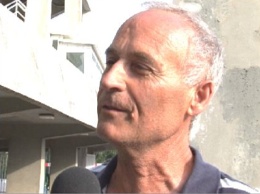
For Jo Maïsetti, the coach of Clavel Kayitare, there is only one solution. “The Paralympic Games are a first step. But we need to go further, bring all athletes together, mix our athletes with able-bodied individuals.” Jo Maïsetti is known in the sports world for having coached the 4×100 meters relay team that won a bronze medal at the Seoul Olympics. Clavel Kayitare is the first disabled athlete he has coached, and he assures, “there is absolutely no difference. I was surprised myself, but these top-level athletes are absolutely identical to all my other athletes.”
“Watching them train puts things into perspective…”
Jo dreams of Games that would bring all athletes together. After all, that is their primary vocation. “But I recognize that the problem lies with the infrastructure. However, if the federations made an effort, they would have everything to gain. I am particularly thinking of athletics, which would be happy to gain handicapped licensees…”
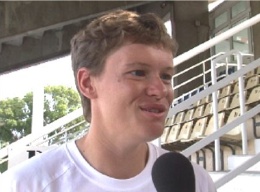 This idea is shared by Manuela Montebrun, the French hammer throw champion. “We are lucky in athletics. Disabled sports events are always organized during the championships. This allows us to meet each other and it’s very positive. Watching them train always makes me put things into perspective. They have more courage than we do, and it helps to keep us grounded when we get carried away.”
Manuela acknowledges that there are connections between the two worlds. “This year, the Paralympians receive the same awards as us. It’s a big step, recognition. But there is still work to be done, especially in terms of categories. At the Paralympic Games, there are, for example, fifteen different 100 meters, so it is true that if we summarize it in terms of statistics, it is easier to win.”
“Look, a disabled person doing sports!”
But for Keita Nantenin and Aladji Ba, 100 meters specialists, accustomed to podiums and visually impaired, things are not that simple. “Above all, it is necessary that the media, spectators, politicians, and even athletes, view us differently than just as disabled people,” explains Keita patiently. “People first see the disability. Look, a disabled person doing sports, it’s nice! That’s not it…”
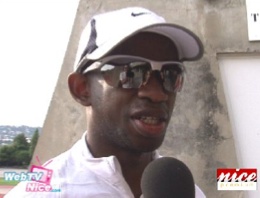 Aladji Ba laments the reactions of the media. “The small media think of us, but the national ones forget us. Either they are unaware or they focus on viewership ratings. And it’s really a shame, because it’s a vicious circle. If we’re not talked about, the viewership won’t follow.” Keita confirms: “we have to get up at 3 o’clock in the morning to watch a 3-minute sports summary. Under these conditions, it’s difficult to change mentalities.” Aladji concludes: “They need to give us a chance before deciding if Paralympic sport is worth it or not…”
This video is from the site Web TV Nice 


