
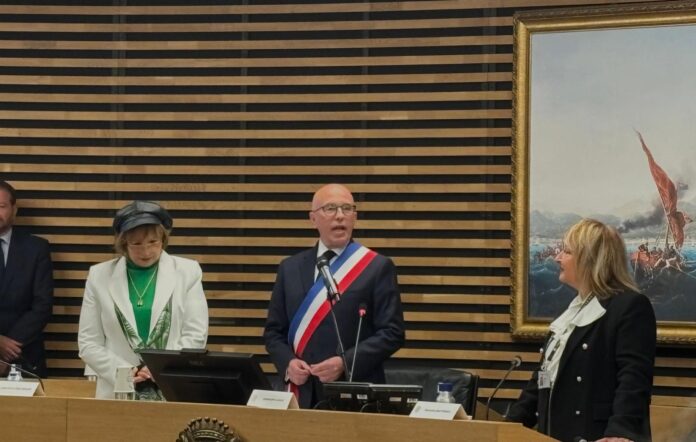
Since the election of the new mayor of Nice, Eric Ciotti, associations, citizen collectives, and political groups have reacted in the first days of the new mandate. The initial actions undertaken in Nice and neighboring municipalities have raised shared concerns about the treatment of vulnerable people, the role of counter-powers, and the respect for fundamental rights.
The Nice opposition groups reacted promptly to the new majority’s first decisions. Several organizations have announced they will closely monitor the municipal and metropolitan policies. This mobilization is built around a shared observation: the initial signals sent by the incumbents have reignited old concerns about public space management and the protection of vulnerable people.
The association Tous Citoyens reminded that Nice has previously experienced a policy of strict control over the presence of homeless people. The association mentioned the dismantling of encampments, anti-begging decrees, the displacement of food distributions, and even the removal of benches and fountains.
The publication by the new mayor of a photograph showing him surrounded by police officers during an operation to evacuate a camp near the exit of the expressway has reignited these criticisms. The comment associated with the publication, “Zero tolerance for those who illegally occupy public space”, was widely discussed. Some associations questioned the meaning of such a statement. They asked whether this firmness targeted poor people or poverty itself. They also highlighted the lack of information on any potential accommodation solution or social support offered to the concerned person.
Tous Citoyens, whose members were candidates in the municipal elections for the Nice Front Populaire, reminded that one in five people lives below the poverty line in Nice. For the association members, fighting against poverty requires lasting support, not operations displacing vulnerable people.
The citizen group Viva! expressed similar concerns. Its members placed the initial local decisions within a broader political context. They recalled that the president of a political party announced the creation of a “LFI municipalities observatory” aimed at “letting nothing pass”. According to Viva!, this strategy contributed to designating a part of the left as an “enemy of the Republic”, while downplaying the threat posed by the far right.
The municipal elections of March 2026 saw several towns in the Alpes-Maritimes shift to far-right majorities. In Nice, the new mayor’s first actions were closely scrutinized. In Cagnes-sur-Mer, remarks made by the mayor regarding the future line 4 of the tramway also drew criticism, especially when he expressed his fear of seeing residents from the Moulins neighborhood moving to his town.
Viva! also reported assaults committed in Old Nice and on the boulevard Jean-Jaurès within 24 hours following the new mayor’s election. The gathering saw this as an additional sign of concern regarding the unleashing of violent behavior by far-right groups.
A Citizen Watch Announced as Lasting
In response to this context, Viva! announced the establishment of a “citizen watch” over municipal and metropolitan management. This initiative aimed to document every violation of people’s rights, every obstruction to associative activities, every action harming living beings or biodiversity, as well as every racist aggression or attack on physical and moral integrity. The collective affirmed its intention to publicize all situations deemed problematic.
The opposition also targeted the underground parking project at Place Wilson, which has become a symbol of this announced vigilance. Hélène Granouillac, who had campaigned for the municipal elections before withdrawing her candidacy, highlighted geotechnical risks signaled by studies and boreholes. She mentioned an “heightened risk” for the concessionaire and potential disturbances for neighboring buildings. Now leading EcolocratieXXI, Hélène Granouillac reminded that the new mayor, then a deputy, had defended this parking in a letter to the Minister of the Interior related to the Police Hotel, while requesting parking solutions for law enforcement. Several local voices denounce a project deemed costly for taxpayers, subject to constraints under the water law and harmful to the place’s vegetative heritage, with the announced disappearance of trees providing shade, coolness, and a refuge for biodiversity.
This announced vigilance is set in a local political landscape marked by long-standing tensions. The oppositions have expanded their scope of observation to social policies, public freedoms, and the living conditions of the most vulnerable residents.
The new municipal majority must now contend with this active monitoring. These organizations, along with others, affirm their intention to play a constant role as counter-powers.


