
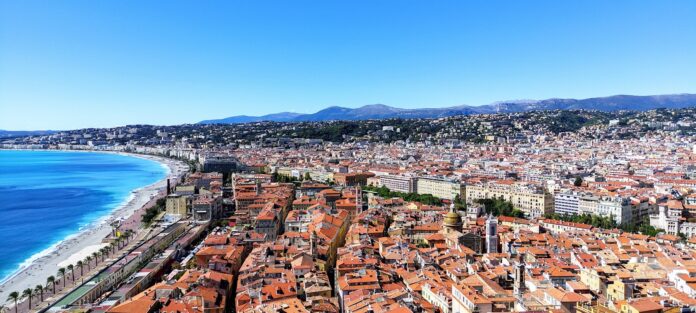
Amid sustained tourism, a dynamic job market, and persistent imbalances in real estate, the year 2025 painted a contrasting economic picture in Nice and on the French Riviera. Indicators showed a capacity for local resilience while highlighting structural fragilities.
The year 2025 ended with a dense economic activity in Nice and the Alpes-Maritimes. Tourism was a central pillar. Employment followed a unique path in the national landscape. Real estate confirmed sustained tensions. These dynamics shaped an active local economy, but one subject to constant adjustments.
The summer tourist season of 2025 confirmed the area’s attractiveness. Nice and the azure coastline recorded hotel occupancy rates close to 85% between June and August. The spring had already established this dynamic. The month of May benefited from the Cannes Film Festival and the Monaco Grand Prix. June, marked by the Ironman in Nice and the Cannes Lions, reached 85% occupancy in coastal hotels.
In July, hotel occupancy increased to 87%. Revenue per available room rose by 8%. Music festivals, including Jazz à Juan and the Nice Jazz Festival, supported summer activities. Furnished rentals also benefited from this demand, with an occupancy rate of 74% and an offer increase of 7%.
August continued this trend. The first two weeks showed a 92% occupancy rate in coastal hotels, peaking at 98% around August 15th. Furnished rentals reached a peak of 88%. In the valleys and mountain resorts, occupancy remained more moderate, around 50%, with peaks at 62%. Tourist residences at higher altitudes reached 65%.
The end-of-season prospects appeared favorable. September bookings increased by three points compared to 2024, and October’s showed a two-point lead. Foreign air arrivals announced a 6% increase for September and October, compared to 9% for the French clientele.
Tourism and Employment: Local Engines Facing Fragilities
Tourist attendance relied heavily on foreign visitors. In July, these clientele represented 55% of hotel guests, rising to 58% in August. Americans held the top spot, followed by the British, Germans, Italians, and Swiss. The North American market remained strategic, with an average expenditure of €170 per day, compared to €75 for a French visitor. Côte d’Azur France Tourisme continued its promotion efforts in the United States and Canada.
The president of Côte d’Azur France Tourisme, Alexandra Borchio Fontimp, praised the “excellent results of this summer season, confirming the unique attractiveness of the Côte d’Azur and the strength of our collective strategy.”
The restaurant industry faced a more challenging period. According to UMIH 06, some establishments recorded decreases in attendance from 15 to 20%, up to 25% for traditional restaurants.
On the employment front, Nice showed a unique trajectory. In the third quarter of 2025, job offers increased by 10% in the Nice metropolis, while the national volume declined by 8%. This trend set Nice apart, as Nantes, Toulouse, Bordeaux, or Lille experienced significant drops. Personal services, health, and social work accounted for more than a third of local job offers. The construction sector maintained a driving role, particularly through temp work, supported by renovation and urban development projects.
Real Estate and Urban Planning: Persistent Imbalances
The real estate market showed mixed signals. Transactions in the old sector increased by 5.2%, with 18,430 apartment sales over twelve months. The median price reached €4,750 per square meter. Old houses recorded 3,321 transactions, with a median price of €540,000, up by 3.8%. Sales in new builds rose by 20%, driven by catch-up sales and block sales. The share of investors decreased sharply, dropping from 65% to 35% in a year.
The rental market continued to contract. Rental listings represented a reduced share of the market. The indicator of rental tension remained high and continued to rise. Building permits declined, with a 22% decrease nationally and similar trends in the region. This situation fueled concerns among developers and local actors.
In this context, the CCI Nice Côte d’Azur and partners of the OIH presented the axes of the Manifesto 2026. The proposals aimed at land access, accelerating permits, developing affordable and temporary housing, and innovative financial tools. Local expectations focused on rapid and concrete measures.
In 2025, Nice and the Côte d’Azur thus displayed real adaptability. The dynamism in tourism and the resilience of the employment market compensated for some fragilities. However, real estate tensions and sectoral difficulties emphasized the necessity for sustainable adjustments in the years to come.


