
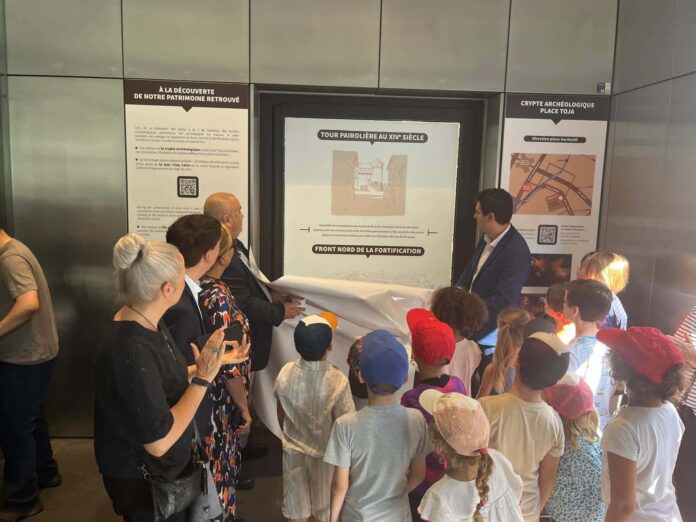
Visited on August 26, the Nice metropolis aims to enhance its heritage and facilitate access to the archaeological crypt. Here’s a recap of the anticipated updates.
Following the completion of work on tram lines 1 and 2 at the Garibaldi – Château stop, preventive excavations were carried out alongside construction work in 2006. Accompanied by illustrations of the 14th-century Parolière tower excavations, the city has decided to install QR codes to be scanned for an audio-guided tour of the tram stop.
Further down, the deputy for Scientific Culture, Jean-Marc Giaume, expands on the history of Joseph Garibaldi. “Garibaldi is the cherished child of victory. Behind you is the port of Nice, where he was born. It’s a small reminder of Garibaldi’s history, made by Ernest Pignon-Ernest.”
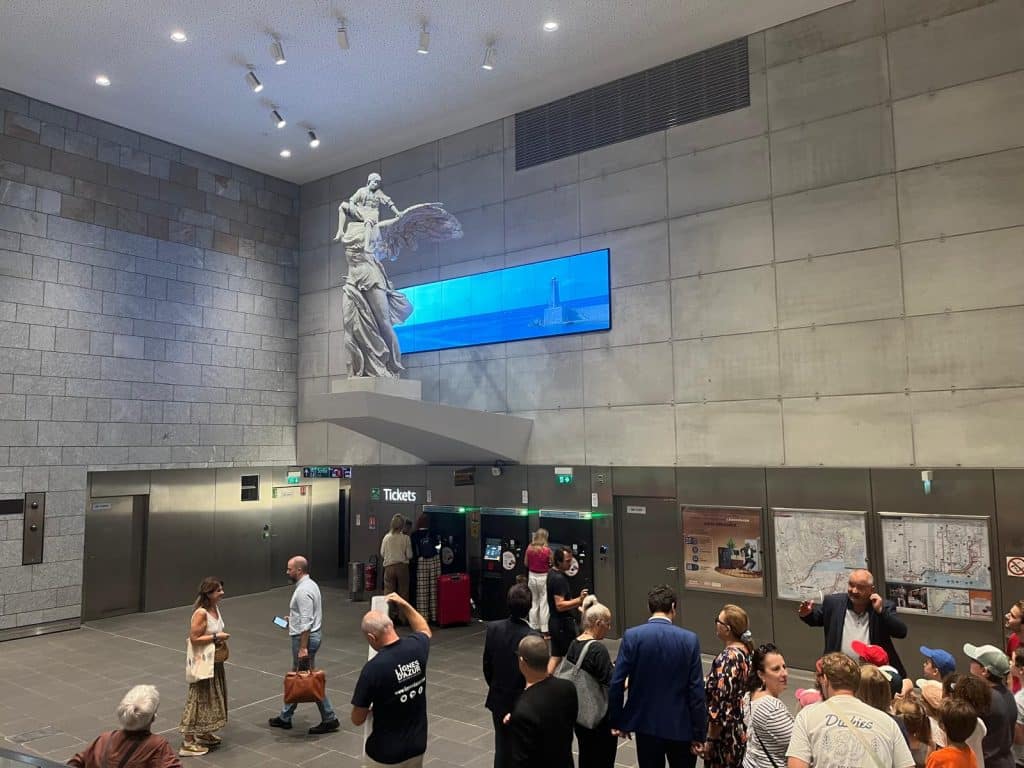
Contextualize and Reconstruct
Upon reaching the entrance of the archaeological crypt, the ground splits open to provide access to the underground. To the right of the entrance, an archive from the Alpes-Maritimes presents the city’s plan from 1610. The 2,000 m² subterranean room is located north of the city, at Jacques Toja square, beneath Jean-Jaurès boulevard and Garibaldi square, along the Paillon river.
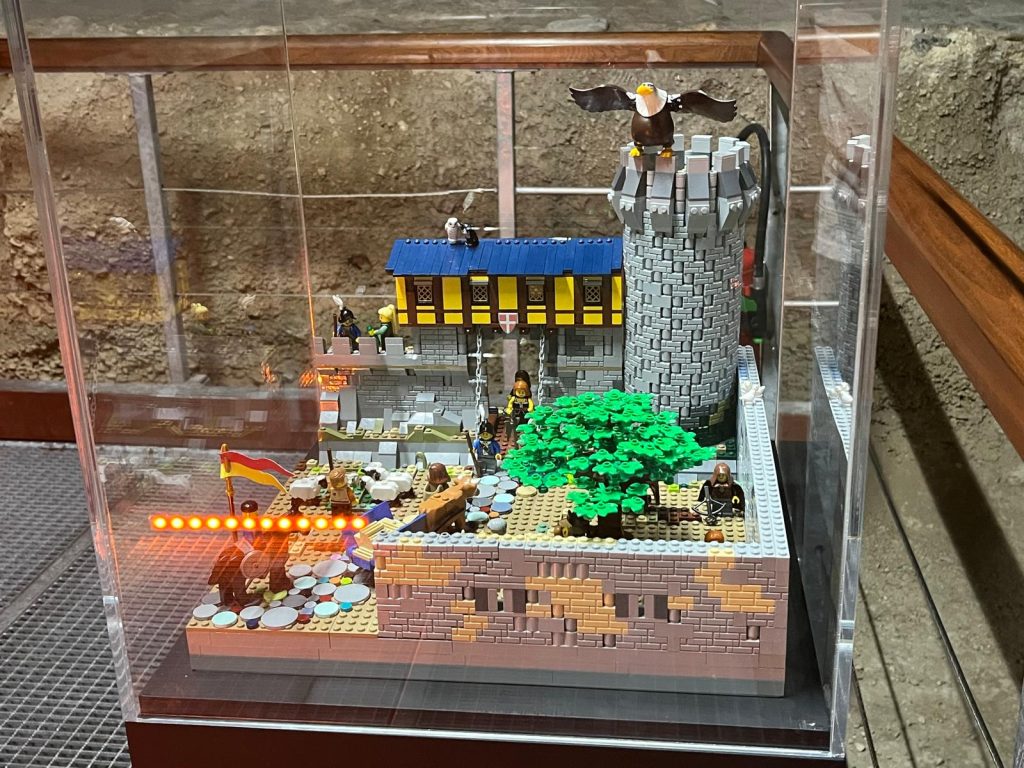
Designed to prevent enemies from directly approaching the city’s walls, the ravelin is equipped with loopholes, small windows situated on all walls, for firing crossbows and bows. The illustrator of the Alix series, Marc Jailloux, created five illustrations in five months. The panel is completed by the Nissa Scientifica edition, this time with the Franco-Niçois translation of the book The Archaeological Crypt of Nice*, a book that children could obtain for free.
“We have the evolution of these walls from the 14th to the 17th century. It is unique; in the meantime, there will be wars and destructions. We have five centuries of the history of the fortifications of Nice,” rejoices the official in charge of Scientific Culture.
*The book costs €6


