
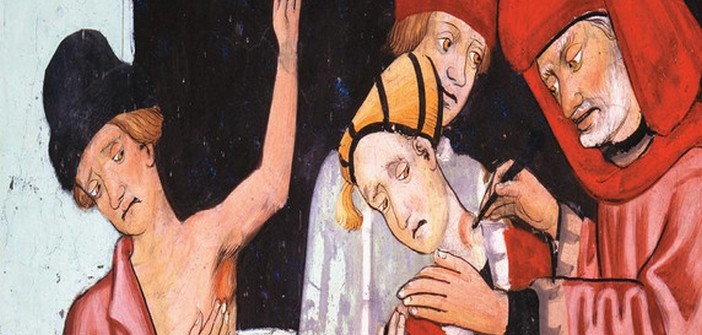
Until May 1st, the House of Nature, located in the Grande Corniche departmental natural park, is hosting the exhibition “The Adventure of Medicine,” designed by the departmental archives.
The exhibition highlights and traces the progress of medicine from the Middle Ages to the end of the 20th century.
During the Middle Ages, people sought God for healing, and medical practice was dominated by the church. Chapels were painted and dedicated to healing saints, such as Saint Sebastian or Saint Roch, to protect against the plague.
It was from the 17th century onwards that scientific advancements allowed for progress in medicine.
In 1804, Napoleon regulated the practice of medicine with the establishment of three levels of practitioners: doctors, surgeons, and health officers.
In the Alpes-Maritimes, climatotherapy launched tourism at the beginning of the 19th century, as the medical community believed that the mild winter climate of the Mediterranean coast had a beneficial effect on patients, especially those with pulmonary tuberculosis.
Radiology was invented at the beginning of the 20th century, and Saint Roch Hospital was equipped with it in 1909.
The Nice-native Albert Calmette developed the BCG vaccine in 1921, which enabled the eradication of tuberculosis.
Subsequently, the Pasteur Hospital was built on the site of the former Saint Pons monastery, and it was inaugurated in 1937 by the President of the Republic, Albert Lebrun.


