
For NICE-PREMIUM, Eric BORGHINI addresses the stakes of the reform for French football.
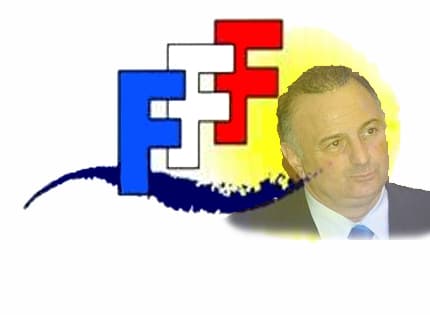 Master Eric BORGHINI, President of the Côte d’Azur District, was chosen with four other district presidents among the 101 spread over the national territory, as a negotiator for the FFF at the Football États Généraux held on October 28 and 29, 2010, at the INSEP in VINCENNES.
On November 24, 2010, at the Federation’s headquarters in Paris, he will participate in a new stage of the negotiations between pros and amateurs to finalize the “Framework Law” to be presented at the decisive Federal Assembly on December 18, 2010.
The subsequent schedule of the reform provides for an Extraordinary Federal Assembly on April 2, 2011, to adopt the new statutes of the FFF, and on June 18, 2011, an Elective Federal Assembly is expected to lead to the appointment for 18 months, until December 31, 2012, of the national leaders of the federation based on the new texts.
Desired by the President of the Republic, Nicolas SARKOZY, the French Football États Généraux took place in a constructive spirit with the sincere desire to bring together, on the theme of governance, the viewpoints of professionals and amateurs.
The matter was not simple because the differences and unspoken issues, numerous at the outset, required no less than four preliminary meetings for discussion and framework to reach a harmonized position on October 28, 2010.
The main change is “philosophical” in nature. The reform brings about a true “cultural revolution” as we move from a rather authoritarian, dirigiste, and frankly undemocratic system, where individual paths (the egos?) alone prevailed, to a democratized system based on a tightened Executive Committee of 12 members (the former Federal Council), a true cohesive team, elected by list vote, based on a program discussed and validated by the Elective Assembly.
The future president of the Federation will be the “captain” of the team, that is to say, the leader of the elected list.
This now established principle of list voting, which was a strong demand of the amateur world, allows a shift from an “affective” approach to a resolutely “reflective” approach: what do we truly want for our national football?
The idea is to promote a project, a team of competencies (not just friends!), united around a program, a roadmap for the mandate, voted on at the same time as the list. Alongside this strengthened executive, a High Authority is instituted, where all football actors (Players, Educators, Referees, unions, associations, etc.) will be represented and will function for oversight, control, intervention, and alerting in case of drift.
Thus, the reform establishes a simple and readable organization of federal entities: the LFP will handle all professional football, the LFA will handle all amateur football; in this respect, amateurs gain almost independent management equivalency with professionals, and the FFF will deal with common areas: French Teams, National Selections, Coupe de France, DTN, Refereeing, International Relations, Federal Finances…
Now, only one question, but which is twofold, remains in debate: the rebalancing of the weight of professionals at the Federal Assembly through a new distribution of their votes that considers the economic power of the professional sector, and its counterpart: the new financial equation that must allow the amateur sector, which has the power of license numbers, to sustain its actions for the general interest, enabling it to fully assume the public service mission assigned to the FFF by the State.
The discussions are intense as pros want 40% of the votes where they currently hold only 25%, and on their side, amateurs want the financial aid granted to them by the same pros to rise to 16.7 million euros for the 2010/2011 season where only 10.5 million euros were planned. This, expressed as a percentage of TV rights and online betting, represents about 2.5% of these revenues. Moreover, the joint meeting of the league presidents’ and district presidents’ colleges on November 12, 2010, commissioned negotiators to additionally obtain a “floor” around 12 million euros in case the revenues from TV rights and online betting were to decrease significantly. Because in such a case, 2.5% of nothing would still be nothing! And the amateur world needs financial guarantees for the budgetary visibility of its actions.
Naturally, as nothing is simple in life, and to complicate our work, we must confront extremists from both camps. The “amateur talibans” do not want to hear about the slightest increase in the percentage of pro votes at the Federal Assemblies, citing the number of licenses (over 2 million) at the FFF; and the “pro ayatollahs” believe they are already doing too much in the context of a professional football economic crisis, resulting in a cumulative deficit to date for L1 and L2 of 177 million euros!
But underlying is the major fear of the amateur world, clearly expressed on November 12 by some courageous district presidents, that the new distribution of votes contains the germ of the possibility, now more than a credible likelihood, of having one day a federation president from the professional world!
Is this really so serious? That’s what I answered to my worried colleagues. With the reform, the perspective changes. What matters now is the candidate’s program, the men and women around him — their origin does not matter —only competence should guide choices. Therefore, we should not fear the future and trust intelligence, the determination to bring modernity to life in football, and the spirit of responsibility that must motivate future leaders of both the amateur and professional spheres.
Thus, the terms of the governance reform alternative are of biblical simplicity:
- Either we accompany the change and thus influence the transformations that will happen anyway, with or without us, football decision-makers;
- Or we remain spectators of the change, in which case we are condemned to endure it!
It is in this context that amateur football has an appointment with the History of our Federation. It is facing its destiny. Believing that one can settle the KNYSNA disaster by a magic trick to make the real responsibilities miraculously disappear would be suicidal for French football. This is still evident with the recent rebound of controversies over the famous “bonuses” of the Blues! The explosion that followed the trail of mud left in the wake of the “bus of shame” has far exceeded the case of the unconscious and immature 23 “rebels.”
Today, if the response we provide to the crisis is not up to the stakes, sporting and moral bankruptcy will add ridicule. And French football will not recover for a long time!
Reducing the issue of football institution reform and its governance to this rear-guard and utterly obsolete debate of a
picrocholine war between “Pros” and “Amateurs” is to fight the wrong battle.
The real question – the only one, in fact – is: will we be able to find together, pros and amateurs, a remodeled functioning of our institution that is both more democratic, calmer, but also more effective to ensure that another “KNYSNA” never happens again?
To this crucial question, the French Football États Généraux of October 28 and 29, 2010, provided a clear, pragmatic, and consensual answer.
That’s why on this governance reform project, we cannot afford to move backward. We must not be deaf to the aspirations of our 2 million licensees who would not forgive us if the mountain gave birth to a mouse. They would forgive less if this “reform” were seen as a “little arrangement between friends.” Even less if it were sacrificed on the altar of selfishness and conservatism. To rise to the challenge means being able to surpass the “ego polka,” always with the general interest as the engine of our reflection and actions.
Football governance reform cannot be limited to a mere dressing of the existing failed system. Let us have the intelligence to keep what works in our house and the courage to turn without complacency from the real causes of our dysfunctions. Let us stop fooling ourselves that “everything is fine” within our house. If that were the case, we wouldn’t be here today!
Claiming today that JP ESCALETTES is the sole person responsible for this failure and the malfunctions in our federation leading to the moral and sporting bankruptcy that football is going through is not only intellectual dishonesty but also cowardice.
Let us have the courage to surpass ourselves to meet the challenge before us. We cannot afford the luxury of failing the renovation effort of our federation.
Let us be capable together of rising to the ambitions set: to successfully execute this renovation effort of our federation, which has raised so much hope. We would be culpably responsible if, tomorrow, the reform we present turns out to be colorless, odorless, and tasteless.
We can no longer afford to disappoint neither our licensees nor our thousands of volunteers who believe in our football and are active in our Leagues and Districts nor the millions of fans and enthusiasts of our discipline, nor the public authorities who, lurking, will certainly not be satisfied with a bandage over a wooden leg.
We will not cure our ailing football with just tea! Let us not fear the fertile breath of reform, let us not fear the professional football that needs us and will build nothing without us or against us, let us not fear moving forward, hand in hand with the pros, as true adult partners who have bet on intelligence and creativity to ensure the full effectiveness of the reform.
That is why in this negotiation, apart from French football, there should be no winner or loser. There has been a consideration of all constraints and the weight of each. The FFF represents 2 million licensees, the power of numbers, and the spirit of public service; the LFP is the economic and media power within a commercial framework.
We have so far reached a balanced agreement, full of hope for the future of our discipline. The last straight line should allow us to complete the project of “aggiornamento” of our football.


