
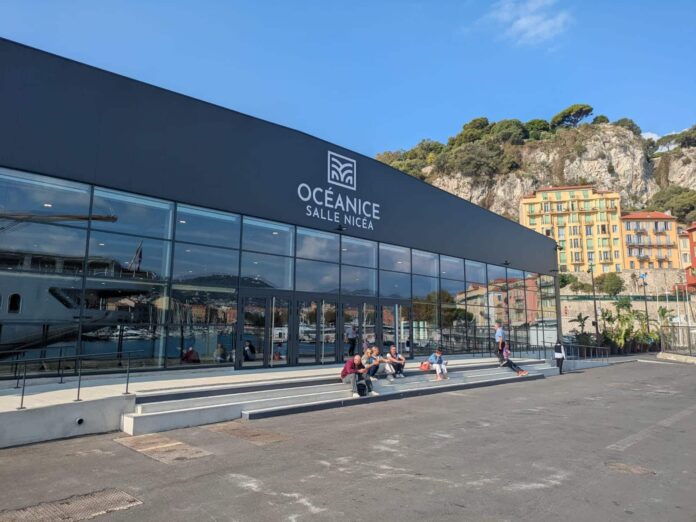
A letter sent by UNESCO in June 2025 questions the port convention center. The maintenance of this building raises concerns about the future of the city’s World Heritage status.
Nice might see its inclusion in the UNESCO World Heritage questioned. A letter dated June 5, 2025, alerts the city council about the consequences of the OcéaNice convention center located at the port. The international organization mentions a “real threat to the outstanding universal value of the property.” The message is advisory, not currently mentioning any removal.
The protected area notably includes the Promenade des Anglais and the port. This recognition places Nice alongside globally renowned sites. The listing is based on strict criteria, with architectural and landscape balance being a central element.
The creation of the port convention center somewhat disrupts this balance. On the city council’s website, the facility is presented as intended to host “concerts and numerous large-scale cultural and artistic events.” This vision does not align with the analysis of the international organization. ICOMOS (a non-governmental organization specializing in the international council of monuments and sites) assessed the building’s impact. The report submitted to the World Heritage Committee highlights an incompatibility with the site’s characteristics.
A Temporary Project Turned Permanent
The convention center was built for a specific event. Unoc 2025, the United Nations Conference on the Ocean, was held in Nice in June of that year. An exemption allowed for the building’s installation. The authorization was temporary, with the expectation of removal after the event.
The current situation differs from this initial framework as the temporary structures have a three-year building permit. An extension is underway. The facility is intended to serve as a press center for the 2030 Winter Olympics and Paralympics. The bill regulating this event plans for urban and environmental adaptations. The goal is to expedite the necessary developments.
The convention center represents a cost of 23 million euros. This expense has sparked criticism in local discussions. The building’s temporary nature now appears to be challenged. The gap between the initial purpose and the prolonged use fuels tensions.
During a debate held in March 2026 during the municipal election, several mayoral candidates mentioned one more unnecessary expense.
Increasing Pressure on the Municipality
The June 2025 letter explicitly requests the removal of the building. The aesthetics of the convention center are considered incompatible with the nature of the listed site. This demand comes with expectations regarding the timeline. The dismantling must be specified as well as the method for redeveloping the space.
The previous city administration had not initiated this process. The maintenance of the OcéaNice convention center creates a stalemate. The international organization implies that maintaining it could lead to questioning the listing.
It is now up to Eric Ciotti, the new mayor to handle the issue. A meeting organized on March 27th reminded the international organization’s expectations. The “Nice World Heritage” mission emphasizes the need to define a timeline and a transformation project.
The new mayor mentioned a desire for a different direction, describing the current building as “a big mistake.” A new project is being structured, with the aim to create a more sustainable convention center. The project also includes work on the port’s breakwater, estimated at between 30 and 40 million euros.
Between International Issues and Local Choices
The situation places Nice in a complex decision-making position. Retaining the convention center addresses the needs of the 2030 Olympics. Removing the building meets the requirements of the global listing. The two objectives seem difficult to reconcile.
The World Heritage status represents a matter of image. Losing this status could have symbolic and economic consequences. The debate goes beyond the architectural issue alone. It questions how to balance urban development with heritage preservation. In the coming months, the new municipality’s decisions should clarify their choices. Should the dismantling be confirmed, it will serve as a signal to UNESCO.


