
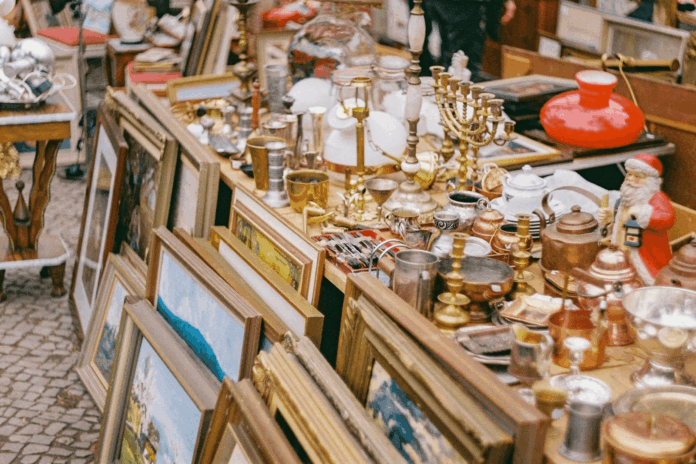
As Christmas 2025 approaches, second-hand shopping is becoming a dominant consumer practice. An IFOP x Leboncoin study confirms a significant shift. Nice ranks fourth among the cities with the most growing interest. In the Azurean capital, the search for thrift stores, vintage furniture, and second-hand items is now part of daily life.
Second-hand, long viewed as a fallback choice, is becoming a social, economic, and environmental standard. The IFOP x Leboncoin Barometer – 3rd edition (2023–2025) highlights a change in scale. Giving a second-hand gift has become a dominant, accepted, and planned practice for a significant portion of the French population.
The figures reflect this normalization. According to the barometer data, 45% of French people say they have already given a second-hand gift. The level remains stable compared to 2024 and has increased compared to 2023. The same proportion says they have already received one. For Christmas 2025, more than one in three French people plan to give at least one second-hand gift. The practice now spans all profiles and households.
In this national context, Nice stands out. The city ranks fourth among French cities that love second-hand, with a 156% increase in searches related to thrift stores. Nice is positioned behind Belfort, Arles, and Paris. The observed trend confirms a local shift in consumer habits.
Nice: among thrift stores, platforms, and local markets
In Nice, second-hand shopping is part of an already dense urban fabric of independent shops, markets, and local initiatives. The increase in searches reflects a growing interest in vintage clothing, second-hand furniture, and upcycled items. Online platforms like Vinted coexist alongside physical shops and local markets. As the holidays approach, these spaces see increased traffic.
This trend is part of a broader movement. Over the past month, Google searches in France for “vintage clothing” have increased by 210%. Searches for “vintage armchair” have jumped by 395%. Second-hand goods attract a variety of profiles, seeking unique pieces that add character to a wardrobe or interior.
The IFOP x Leboncoin Barometer highlights a double dynamic. On the one hand, 25% of French people have been giving second-hand gifts for more than five years. This figure has increased by five points compared to 2024. On the other hand, 59% of those who give second-hand gifts started less than three years ago. The turnover among practitioners remains constant.
The act is also becoming more intentional. In 2025, 48% of second-hand gifts are bought specifically to be given. This rate was 41% in 2023. Second-hand shopping is part of a thoughtful, anticipated, and assumed approach.
Young adults and families, drivers of change
Generational changes appear clear. Among 18–24-year-olds, 59% say they have already given a second-hand gift. This rate far exceeds the national average. Households with children also show strong adherence, with 62% adopting the practice. These social categories are key drivers and contribute to spreading the practice.
The economic factor remains central. 51% of respondents cite the savings made as their primary motivation. An item bought second-hand costs on average between 40% and 70% less than its new equivalent. In a context of pressure on purchasing power, this argument carries significant weight in household decisions, including in Nice.
Environmental motivations are increasing. 38% of French people mention ecological reasons. 85% believe that giving second-hand is good for the environment. 77% think that “it’s the thought that counts.” The ethical argument joins the economic one. The cultural transition is solidifying.
The image of the second-hand gift is also changing. Only 12% of French people say they are disappointed when receiving a second-hand gift, compared to 17% in 2023. The association with stinginess is declining and now only concerns 14% of respondents. Conversely, 52% of French people find second-hand objects more charming and characteristic than new ones. The emotional and aesthetic value is increasing.
Social media amplifies the phenomenon. On TikTok, more than 84,000 posts use the hashtag #friperie. A video showcasing Paris flea markets has garnered nearly 300,000 views. This visibility reinforces the appeal of flea markets and alternative practices.
In Nice, this dynamic reflects a lasting change. Second-hand shopping is no longer a constraint. It has become a structuring choice, at the intersection of budget, meaning, and style. As Christmas 2025 approaches, the Azurean capital confirms its central place in the French geography of second-hand shopping.
NicePremium is a free, independent local news outlet.
Help us keep going by supporting our work from €5 per month.


