
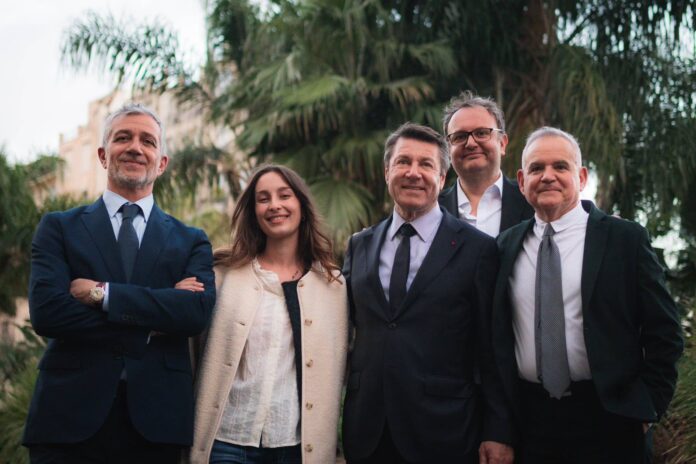
Gathered at his campaign headquarters, Christian Estrosi presented the health aspect of his political project approaching the 2026 municipal elections. Surrounded by professionals from the sector, the mayor of Nice expressed a central ambition: to ensure “zero disruption in health pathways” and make Nice a territory where access to healthcare would be effective for all, regardless of age, neighborhood, or social status.
While part of a campaign framework, Christian Estrosi claims continuity in his actions. “Health has always been at the heart of my policy,” he affirmed, recalling his role as president of the Supervisory Board of the CHU of Nice. “My priority in recent years has been to deliver the CHU Pasteur and then to support, during COVID, extremely innovative health policies.”
Presenting a harsh assessment of the national situation, he believes that local authorities must now take over. “A few years ago, France was one of the best in the world in public health. Today, we are fifteenth. We must be a city at the forefront of innovation in the face of new challenges, with a health policy that is deteriorating and which must absolutely be compensated for with the community. I want Nice to be the best in the world.”
A health project structured around “health for all”
The health project presented is structured around a claimed principle: health for all, based on proximity, prevention, and continuity of care. The first axis concerns access to healthcare, with the creation of ten health centers by 2030, some already open and others planned in neighborhoods identified as priority areas.
These multidisciplinary structures aim to combat territorial inequalities, limit the abandonment of care, and offer clearer pathways, especially in the most vulnerable sectors. The clear objective is: that no resident of Nice finds themselves without a solution for care.
Prevention is another pillar of the project, with targeted actions on cardiovascular and respiratory diseases, health and sport, screening, and training citizens in first aid. The project also includes the ambition to make Nice the first French city with zero HIV transmission, by strengthening prevention, screening, and access to treatment.
The mental health of children and adolescents occupies a central place, with the announced opening of a new Adolescent House in the west of the city, in connection with pediatrics actors in Nice. Specific provisions are also planned for children with DYS disorders, autism spectrum disorders, ADHD, or high intellectual potential, as well as consultations dedicated to addictions, including those related to screens.
The project also aims to better support family caregivers, with the implementation of a “SOS Caregivers” line capable of directing requests in less than 48 hours and the development of temporary accommodation solutions to avoid exhaustion and discontinuity in care.
Finally, the strategy includes strengthened support for medical research, with an annual call for projects, and a structuring project of the future Cité des Santés in the Plaine du Var, intended to strengthen the healthcare offer in the west of Nice in partnership with the CHU and healthcare stakeholders in the territory.
New faces: professionals mobilized for accessible health for all
To embody this ambition, Christian Estrosi relies on committed healthcare professionals, presented as “new faces” of the project, coming from the field.
Among them, Aurélie, a 25-year-old hospital nurse, says she wanted to speak out to represent the daily life of caregivers. “I wanted to give my voice as a caregiver. We hear a lot of opinions, but few from nursing assistants or nurses. At the hospital, I see the reality of patients, disruptions in care, therapeutic gaps and what caregivers experience daily,” she explains. Born in Nice, she summarizes the spirit of the project: “zero disruptions for patients, zero disruptions for caregivers. Health must become a priority again for all residents of Nice.”
Another central figure, Dr. Pierre-Marie Tardieux, 57, head of the emergency department at the CHU of Nice, claims a clear commitment. “I am for health for all, without leaving anyone by the wayside. From the most vulnerable to those who may need it less, access to care must be facilitated, understandable, and present in all neighborhoods,” he asserts. With his experience in emergencies, he recalls that fractures also exist in urban areas. “We see about 100,000 patients a year. This gives us a very clear view of the difficulties in accessing care, broken pathways, and the abandonment of care.” For the emergency physician, the operational priority is clear: “the first challenge is the health centers, especially in the most complicated neighborhoods. If there are no more doctors at a given time, then we set up a health center. The goal is for there to be no more disruptions.”
Through this project and these new faces, Christian Estrosi strives to make health for all a strong marker of his ambition for Nice, by associating elected officials and field professionals around a common goal: ensuring continuous, clear, and equitable access to healthcare for all residents of Nice.
Diane Roustan
NicePremium is a free, independent local news outlet.
Help us keep going by supporting our work from €5 per month.


