
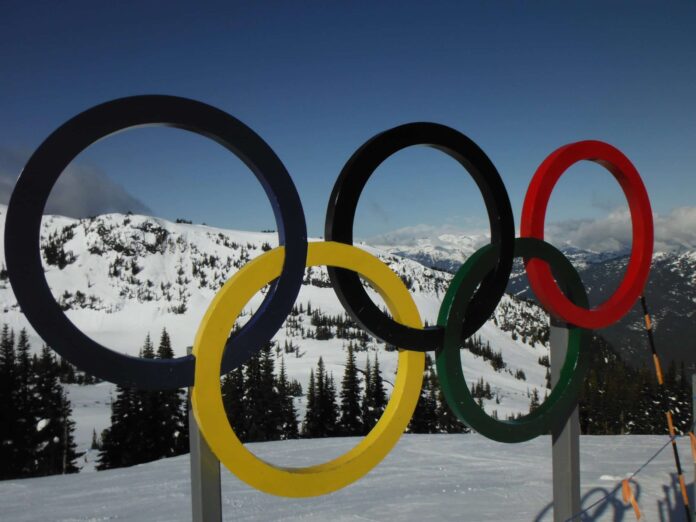
The awarding of the 2030 Winter Olympic and Paralympic Games to the French Alps has triggered widespread institutional mobilization. Local authorities, the State, and national operators are progressing on transport infrastructure, while an environmental roadmap structures commitments for an event conceived as a lever for transition. The vote on the Olympic law by the deputies complements this framework.
Public partners have secured a funding plan included in the CPER, with 532 million euros dedicated to the modernization of road and rail infrastructure essential for accessing the Alps. This financial framework allowed the project managers of the Briançon cluster — SNCF Réseau, SNCF Gares & Connexions, SOLIDEO, State services, and the Hautes-Alpes Department — to quickly initiate studies and the first operations.
The Alps line is a priority axis. Studies have been launched without delay, and construction contracts are expected to follow in 2026. The renewal of the Paris–Briançon night train carriages is one of the commitments. The one billion euro order is on schedule, with awarding expected in September 2026 and funds commitment in November, subject to state budget approval.
The Briançon Multimodal Exchange Hub represents another major aspect. The project includes a complete modernization of the station and an opening to the Sports Park through a walkway. The steering committee met on January 14 and validated the studies, exterior developments, the passenger building, and the station’s opening to the city. Partners highlight steady progress in operations. Renaud Muselier summarized this dynamic: “The Olympic promise is being kept. The rash declarations by naysayers, who thrive politically on problems without solving them, are belied by the facts. Everyone is working, it is a historic mobilization that transcends divisions and is now reinforced by the vote on the Olympic Law.”
An environmental roadmap to structure the legacy
On June 27, 2025, the Government presented in Briançon the foundations of an environmental roadmap for the 2030 Games. This document, developed with ecological services, ecological planning, DIJOP, COJOP, SOLIDEO and the Regions, aims to align the Olympic project with national transition mechanisms. The goal is to embed the Games in a logic of sustainable legacy, consistent with the State’s Heritage plan.
The Strategic Committee, which convened on January 19, 2026, validated an architecture based on eight issues: emissions, energy, development, biodiversity, food, water, “one health”, and circular economy. Initial proposals focus on transportation, energy efficiency, limiting artificialization, promoting bio-based materials, preserving ecosystems, water management, pollution prevention, and reducing material consumption.
The ministers in charge of the file reiterated the ambitions. Marina Ferrari emphasized that “the 2030 Winter Olympic and Paralympic Games must be a model of responsibility.” Mathieu Lefèvre stressed the intention not to overlook “any ecological issue.” The Auvergne-Rhône-Alpes and Provence-Alpes-Côte d’Azur Regions highlighted continuity with their mountain and transition policies. Fabrice Pannekoucke referred to the Games as “sustainable, environmentally respectful, and resolutely turned towards the mountain of tomorrow.” Renaud Muselier described the event as “an accelerator for the transition of our territories.”
The COJOP and SOLIDEO also praised the structure provided by this roadmap. Edgar Grospiron recalled that the work carried out with the State constitutes “solid pillars for the sustainability strategy.” Damien Robert highlighted an environmental ambition integrated into all of the works.
The roadmap is to be further enriched by April 2026 before consultation with environmental bodies and territories. A group of scientific experts will support the implementation.
A legislative framework validated by the deputies
The Olympic bill was adopted by the National Assembly in a solemn vote. 403 deputies voted in favor, 99 against, and 18 abstained. The ecologist and LFI groups expressed their opposition during the December debates. The text must now pass through a joint committee before a final adoption expected in early February.
Edgar Grospiron highlighted the importance of this legislative framework, awaited by the IOC. Marina Ferrari detailed the key points: host contract, rights related to the Games, commercialization of advertising rights, ethics section, fight against doping, control of financial flows, and urban planning provisions aimed at accelerating procedures without deviating from the environmental code.
NicePremium is a free, independent local news outlet.
Help us keep going by supporting our work from €5 per month.


