
The new mayor of Nice is implementing a series of measures regarding on-street parking. Starting April 15, 2026, a 15-minute grace period will come into effect. Other changes are also announced, including the creation of additional parking spaces and a possible extension of free parking.
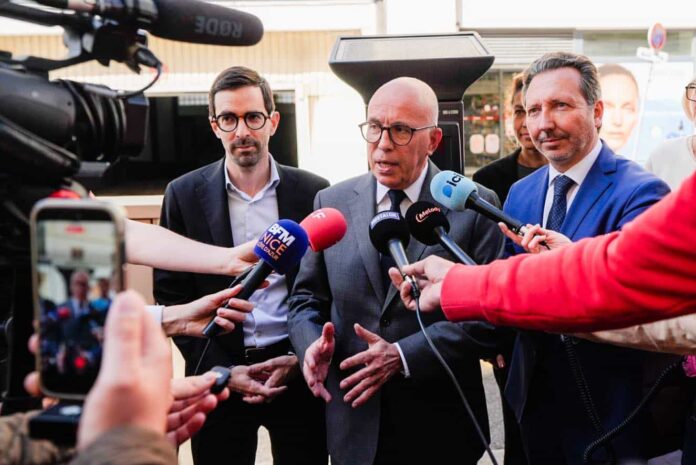
Nice’s parking policy is evolving. The mayor Éric Ciotti presented several measures directly affecting motorists on Wednesday, April 15, 2026. The first decision implemented immediately is the introduction of a 15-minute grace period for paid street parking.
This measure applies to all of the city’s 14,000 parking spaces. The system is applicable to both parking meters and the Pay By Phone mobile app. The stated goal is to ease the rules and limit situations considered as punitive.
“Making parking easier improves quality of life and also promotes and supports economic activity.” This decision reflects an intentional role for cars in the city’s organization. The new mayor aligns this decision with the continuity of campaign promises.
The principle remains simple. A motorist now has 15 minutes to resolve their situation after parking. An agent may issue a fine, but it is canceled if payment is made within this timeframe. The fine is then voided before being sent to the vehicle owner.
A technical adaptation was necessary to enable this system. “The company responsible, on behalf of the city of Nice, for recovering parking fee payments has modified its software.” This change allows for the automatic integration of the grace period into the system.
The mayor also expresses a desire to reduce the pressure felt by residents. “Relieving the pressure faced by the people of Nice in terms of fines” is one of the stated objectives. The system adopts the concept of the “Nice quarter-hour”, applied here to parking.
During the presentation, Éric Ciotti emphasized the concrete nature of this measure. “I wanted us to introduce a form of flexibility in response to the extremely rigid and somewhat blind approach that immediately penalized parking overages.” […] “We are responding to motorists who felt somewhat like cash cows, who, at times, were fined while just making their way to the parking meter.”
Towards a broader parking reorganization
This initial decision is part of a more comprehensive reflection. The municipality announces a goal of creating 5,000 additional spaces over the term of the mandate. These new capacities will address both cars and two-wheelers.
The issue of extending paid parking remains open. The Cimiez district is mentioned as a case to be revisited. “We are going to reopen this issue calmly to provide a quick response,” indicates the mayor, mentioning an approach based on consultation “within the most open and broadest possible consultation,” the official specifies, adding that there is “at this point, no bias in any direction.”
Another option concerns the duration of free parking. The extension from one to two hours is among the measures being considered. A first change had already been decided the previous July, with a shift from 30 minutes to one hour during Christian Estrosi’s term. The new step is still under analysis and could be implemented by the end of the year.
These orientations aim to influence the visitation of the city center. Parking is presented as a lever to support businesses and improve traffic flow. The municipality seeks to find a balance between accessibility and regulation.
The mayor summarizes this approach: “I am not an enemy of the car, but I am also not in favor of an entirely car-centric approach. We need to find a balance; that is the sense of our policy.”
Implementing the grace period, however, represents a cost for the community. The operator estimates a loss of about 30,000 euros per month. This is assumed within the broader strategy favoring a more flexible parking approach.
The system has been in effect since April 15. This gives motorists in Nice additional time to address their parking. This change marks a first step in the announced reorganization. Other adjustments might follow in the coming months, depending on decisions and consultations conducted.
NicePremium is a free, independent local news outlet.
Help us keep going by supporting our work from €5 per month.


