
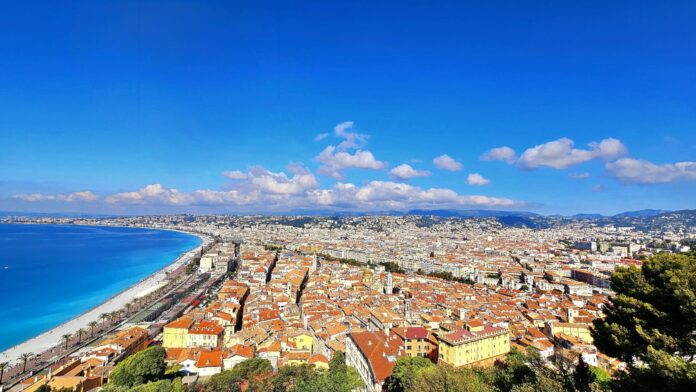
Located between the sea and the mountains, unmissable places shape Nice. Through its history, the Azure Coast city has become a city of multiple influences, making its heritage unique.
The capital of the Côte d’Azur had the honor of being inscribed on the UNESCO World Heritage List in 2021, as a “Riviera Winter Resort City”. The perimeter extends from the seafront to the heart of the city. From then on, summer and winter alike, the city of Nice tells its story through its emblematic monuments.
The Promenade des Anglais
This avenue lines the seafront for over seven kilometers, from the Albert 1st Garden to Nice Airport. Far from being static, the landscape evolves to the rhythm of athletes, skateboarders and strollers. At sunset, musicians share their melodies with passersby. This place offers a breathtaking view of the Bay of Angels.
Dating from the 19th century, this path was inaugurated at the initiative of British reverend Lewis Way. He wished to offer winter visitors the opportunity to enjoy the sea breeze, which was then beneficial for their health, while creating jobs for the people of Nice. The population named this new promenade the “Camin dei Inglés” or “passiaggiata degli Inglesi“. It was not until 1930 that the mythical waterfront became what we know today. A dual carriageway was created, sidewalks were widened and a row of palm trees was planted.
Created in 1950 by Charles Tordo, the famous blue chairs invite passersby to take time to admire the Mediterranean.

Castle Hill
This is one of the most beautiful viewpoints in the Azure City. Rising 92 meters, this former medieval fortress has been transformed into an urban park, offering play areas and shaded paths. From the top of the hill, it is possible to admire a panoramic view of Quai des États-Unis, Old Nice and the Promenade des Anglais.
Only vestiges of a historical past remain. Destroyed in 1706 on the orders of Louis XIV, Nice lost its military potential. Many explanatory panels dot the site to place each ruin in its context. Furthermore, the Castle Hill waterfall was created artificially in the 19th century. It was designed in the spirit of the romantic gardens of the period, in which nature reclaims its rights.
This free location is open from 8:30 am to 6 pm (8 pm in summer). It is accessible by elevator or on foot.
Quai des États-Unis

Extending from the Promenade des Anglais, this quay is located at the foot of Castle Hill, between Quai Rauba-Capeù and the port. This passage is one of the busiest in Nice and is lined with small fishermen’s houses, now renovated and inhabited.
Following Louis XIV’s decision to demolish the Nice ramparts in 1706, terraces were imagined along the seafront. In 1731, the city imposed the construction of buildings, creating a demarcation between the cours (Saleya) and the waterfront. The consiglio d’Ornato council planned in 1832 to trace a road along these buildings, called Quai du Midi. In 1917, this space was renamed Quai des États-Unis by François Goiran. As mayor of Nice, he wished to pay tribute to Americans who fought alongside the Entente forces during World War I.
Place Masséna

In the heart of Nice, no one can miss the emblematic square with red facades and a black and white checkered floor. It forms the junction between the old town and the famous shopping avenue, Jean Médecin. In the center, the Fountain of the Sun overlooks the esplanade. Created by Alfred Janniot, it consists of five bronze statues representing the divinities of Greco-Roman mythology. The monumental marble statue of Apollo dominates the composition. “Conversation in Nice” is a contemporary work, composed of statues perched on masts. They represent the dialogue between seven continents. This square is a privileged place where numerous events are organized, from the Carnival of Nice to the Nice Jazz Festival.
Historically, the Paillon river ran through this square. In the second half of the 13th century, it was covered over. The consiglio d’Ornato supervised every detail, from colors to the proportions of buildings. This balanced ensemble illustrates the aesthetics of the Italian Riviera. This square was dedicated to Marshal André Masséna, a man from Nice who fought the Sardinian army.
Old Nice

With its narrow streets and vibrant palette of colors, the old town offers the opportunity to discover centuries of history with multiple influences, particularly Italian, French and Provençal. Among the emblematic places, the Sainte-Réparate Cathedral is located on Rosetti Square. It reveals sumptuous architecture with colorful frescoes. This free location is open from 9 am to 6 pm. Nearby, the Lascaris Palace opens its doors to visitors to discover the world of Nice baroque art. This monument from Nice civil baroque consists of a monumental staircase and frescoes.
Garibaldi Square
 {
“@context”: “https://schema.org”,
“@type”: “NewsArticle”,
“headline”: “Discovering the Iconic Places of Nice”,
“datePublished”: “2026-07-25T09:19:00”,
“author”: {
“@type”: “Organization”,
“name”: “Nice Premium”
}
}
{
“@context”: “https://schema.org”,
“@type”: “NewsArticle”,
“headline”: “Discovering the Iconic Places of Nice”,
“datePublished”: “2026-07-25T09:19:00”,
“author”: {
“@type”: “Organization”,
“name”: “Nice Premium”
}
}
NicePremium is a free, independent local news outlet.
Help us keep going by supporting our work from €5 per month.


