
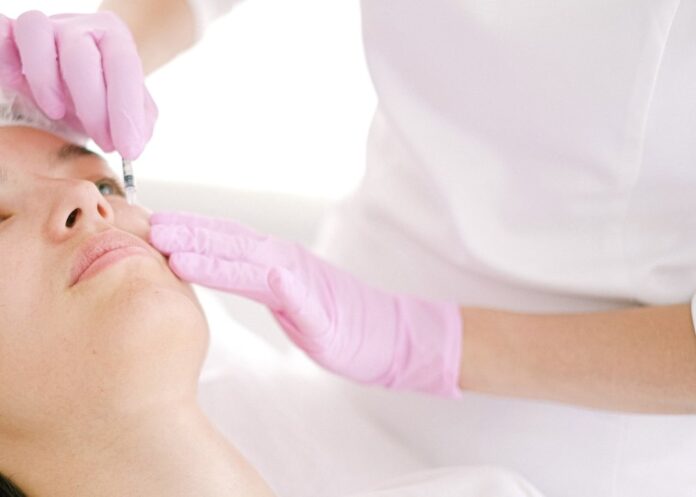
The death of a young woman in an illegal beauty institute in Nice has reopened the debate around the issues raised by the illicit practice of cosmetic medicine procedures. The role of the doctor is paramount but it is weakened by insufficient regulations.
A week after the death of a 25-year-old young woman, following a collapse that occurred after a first injection of an anesthetic, the emergency investigation is ongoing. The prosecutor’s office announced that “the injector had neither real training nor authorization.” This tragedy falls within “a context of development of this type of illicit and dangerous activities,” announced the prosecutor of the Republic of Nice, Damien Martinelli.
The normalization of cosmetic medicine procedures on social media enables the emergence of clandestine networks. “Doctors trained to perform these procedures are subject to medical ethics. They do not have the ability to communicate about what they do, as the fake injectors can freely do,” deplored Anne-Grand Vincent, the co-president of the Circle of Best Practices in Medicine.
This tragedy demonstrates the importance of identifying a trained doctor to perform these procedures. Furthermore, this fact also reveals a gap in the regulation of these practices. A doctor’s expertise is a real stake for patient safety but insufficient legislation creates areas of vulnerability.
Essential medical competencies
Cosmetic medicine procedures must be performed by individuals holding a diploma authorizing them to practice medicine. The patient can verify this, if in doubt, through the Medical Board.
These procedures are necessarily subject to insurance. To be insured, the doctor must hold a university or inter-university diploma covering areas covered by cosmetic medicine. The insurance number appears on quotes and informed consents, which the doctor is required to provide. If in doubt, the patient can contact the Circle of Best Practices in Cosmetic Medicine.
“The doctor must question their patients, determine if the procedure is appropriate, propose a treatment plan and determine which product, in what quantity and for what purpose,” explained Anne Grand-Vincent. The professional is subject to ethics and deontology. In the absence of insurance, they should not perform the procedure because it would result in too great a responsibility.
Doctor training is essential since the practitioner is able to recognize and manage complications and allergic accidents. Injections performed by “fake injectors” present very serious risks. For example, Anne-Grand Vincent warned about the dangers of injecting excessive amounts of anesthetic products directly into an artery, which could cause a cardio-respiratory arrest.
The co-president also addressed the use of counterfeit products found on the internet. The search of the premises in western Nice made it possible to discover new and used products, such as injectable products from Asia.
A practice deserving clear regulation
Cosmetic medicine is not a recognized specialty as such. This profession has organized itself independently for about thirty years. “We have been alerting the authorities for some time to ask them to regulate this discipline to prevent patients from straying towards fake injectors,” declared Anne-Grand Vincent. Despite the decree issued on July 10, “this is not sufficient, we need to go further,” regretted the co-president.
Practitioners of cosmetic medicine procedures face difficulties in that they are confronted with an inability to use certain botulinum toxin-based products. Anne Vincent adds that this product is “a key treatment in comprehensive cosmetic medicine care since it temporarily serves to prevent muscle contractions and the formation of expression lines.” Of course, this use concerns only cosmetic medicine, since this product is also used for indications in other disciplines.
“We urge the authorities to urgently open the conditions for prescribing and dispensing botulinum toxins so that trained and insured doctors can use them legally,” warned the doctor.
This product is originally reserved for five specialties: plastic surgery, dermatology, face and neck surgery, ophthalmology and ENT. In 2019, the National Agency for Medication Safety and Health Products created a text allowing trained doctors to use botulinum toxins. However, there were never favorable outcomes for cosmetic medicine doctors. Thus, they were sourcing this product by purchasing it from pharmacies. Now, the authorities have eliminated this possibility.
In this context, doctors find themselves unable to care for their patients holistically. “The time for regulation is much longer than medical time and this becomes a danger for patients who will tend to turn to fake injectors,” regretted Anne-Grand Vincent. The co-president of the Circle of Best Practices in Medicine believes that authorities must have more confidence in doctors so that patients no longer take risks by turning to beauty salons.
NicePremium is a free, independent local news outlet.
Help us keep going by supporting our work from €5 per month.


