
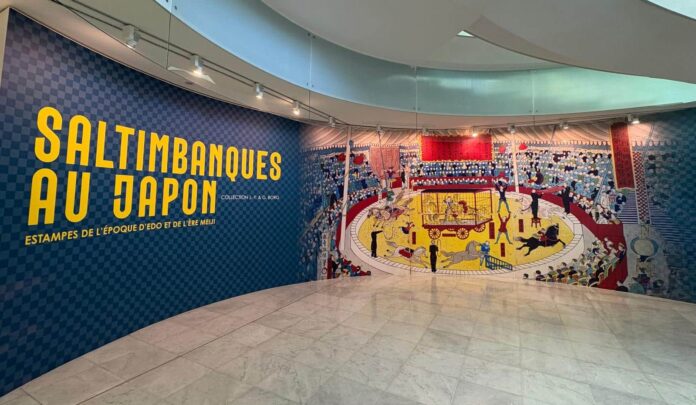
At the Departmental Museum of Asian Arts in Nice, the exhibition Acrobats in Japan explores an overlooked aspect of Japanese culture. Through prints and narratives, it retraces the history of these street performers, caught between marginality and fascination. An immersive experience where traditions, rituals, and Western influences intersect.
Long marginalized, the acrobats nevertheless hold a vital place in the Japanese imagination. Jugglers, acrobats, tightrope walkers, or animal trainers enlivened the streets, temples, and seasonal festivals, offering the public a spectacle that was both accessible and fascinating.
During the Edo period, marked by significant urbanization, these performances experienced a true flourishing. The artists of ukiyo-e, or “images of the floating world,” seized these popular figures, capturing a world that was both playful and transgressive.
With the Meiji era and the opening of Japan, these performances evolved. Between traditional heritage and Western influences, the acrobats also became witnesses to a world in transition.
Between rituals, beliefs, and spectacular performances
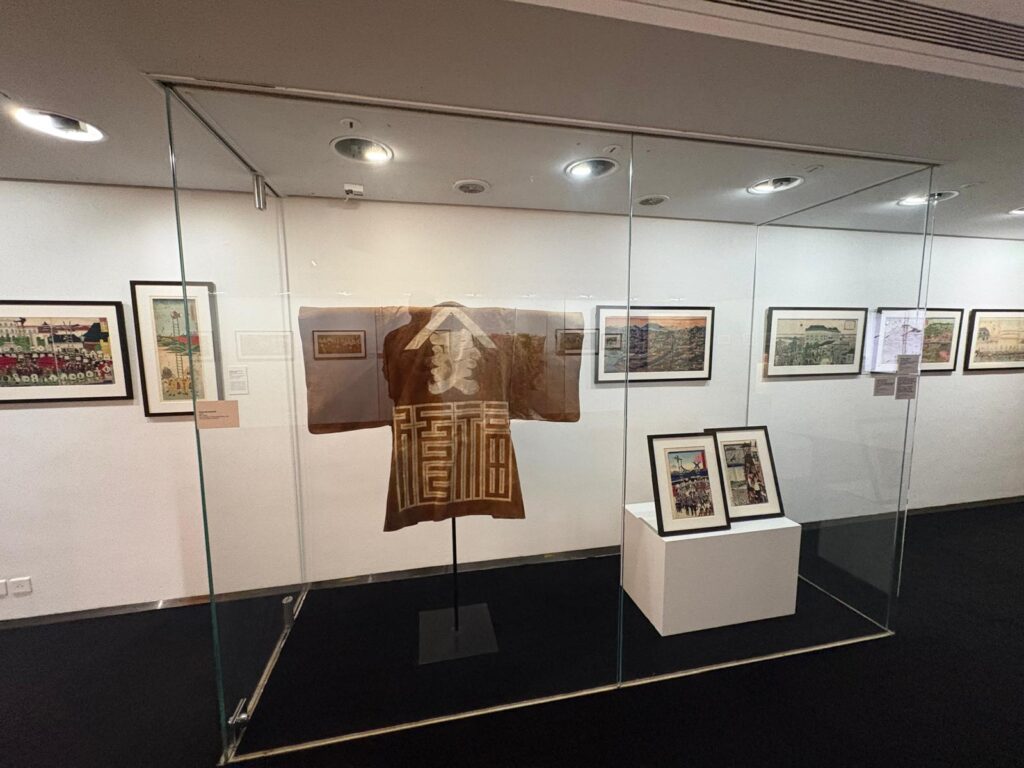
In Japan, street performances are not limited to entertainment: they are deeply rooted in religious practices and beliefs. From the Heian period, these performances became part of Shinto and Buddhist rituals aimed at purification or warding off evil spirits.
Thus, festivals, or matsuri, blend the sacred with performances. Although their origin is religious, demonstrations of acrobatics, dance, or juggling gradually come to dominate, transforming these events into genuine popular celebrations.
Certain practices are particularly memorable, such as the impressive acrobatics of firefighters during the dezomeshiki, or the monkey trainers’ shows (sarumawashi), oscillating between sacred symbolism and street entertainment.
Curiosities, exotic animals, and collective fascination
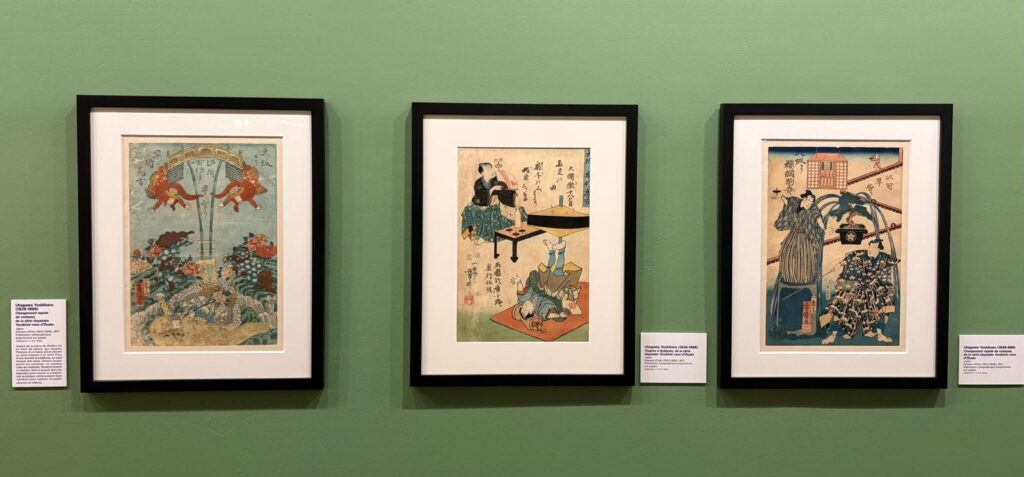
The exhibition also highlights a more unusual aspect: the fascination with exotic animals. In Edo, especially around the Ryogoku Bridge, fairground attractions drew curious crowds eager to discover rare creatures.
Panthers, elephants, and other animals from distant lands became true phenomena. Their presence reflects a growing curiosity about the outside world, well before the official opening of Japan.
These exhibitions contributed to the construction of a spectacular imagination, where the strange and the wondrous play a central role.
When the West meets Japanese acrobats
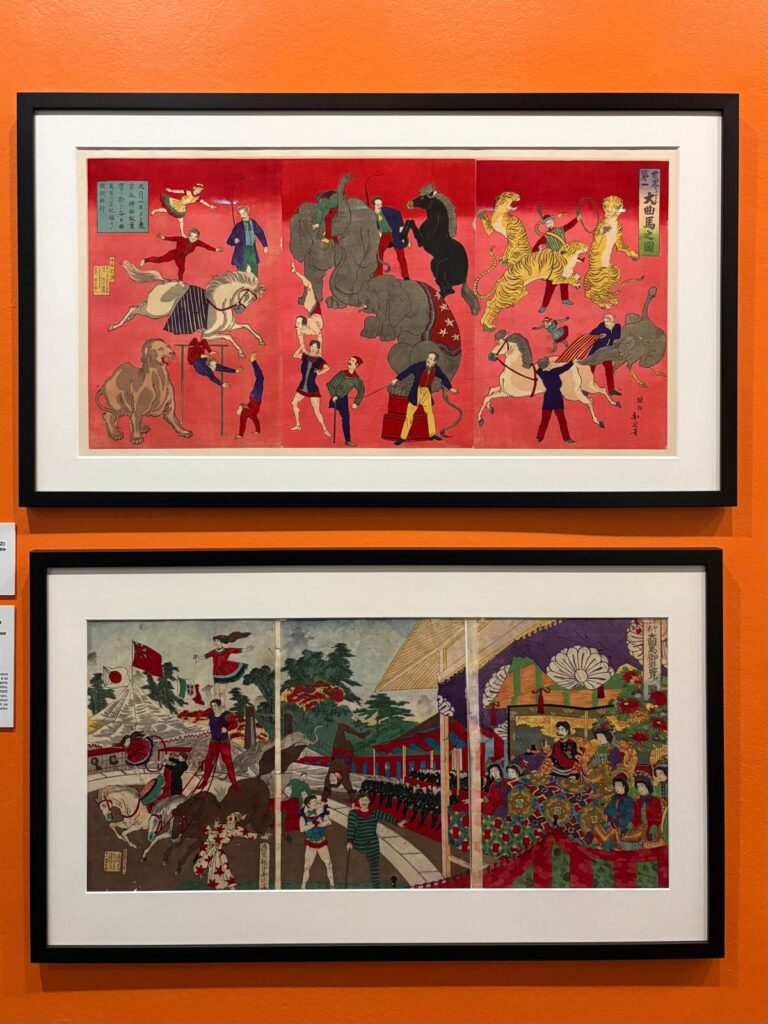
One of the major turning points discussed in the exhibition is the opening of Japan in the mid-19th century. After more than two centuries of isolation, the arrival of Western circuses transformed local practices.
Figures like Richard Risley Carlisle and Giuseppe Chiarini introduced new shows, blending equestrian acrobatics, clowns, and exotic menageries. These performances fascinated the Japanese public, even captivating Emperor Meiji himself.
But the exchange was reciprocal: some Japanese acrobats ventured to the West in turn, helping to spread their art beyond borders.
A cultural bridge in the heart of Nice
Presented at the Departmental Museum of Asian Arts, this exhibition aligns with a desire for transmission and dialogue between cultures. Designed by architect Kenzō Tange, the venue acts as a true link between Europe and Asia.
With Acrobats in Japan, the museum offers an interpretation that is artistic, historical, and social of the performing arts. An invitation to rediscover these forgotten figures, who, between street and stage, have shaped an essential part of Japanese culture.
Practical information
- Exhibition is open until June 28
- Open every day except Tuesday from 10 AM to 5 PM
- Free entry
- 405, Promenade des Anglais, 06200 Nice (behind Parc Phoenix).
NicePremium is a free, independent local news outlet.
Help us keep going by supporting our work from €5 per month.


