
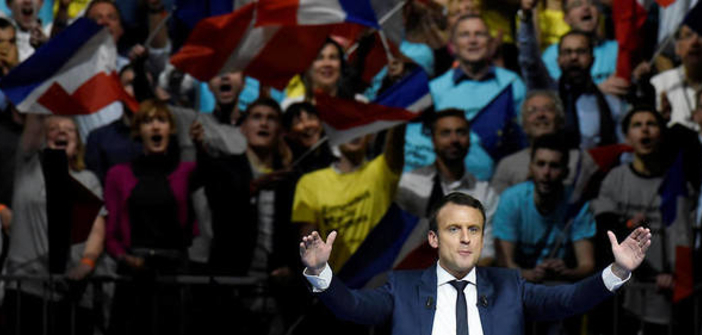
Since May 7 and his victory in the presidential election, Emmanuel Macron has been asserting his style.
After the controversial appointment of Prime Minister Edouard Philippe, a new stage was reached on Wednesday, May 17, with the appointment of the government.
A gender-balanced cabinet that would embody political renewal and the left-right balance, that is what Emmanuel Macron promised.
With 18 ministers appointed, are the promises being kept? Why these choices? What political message do they send?
Emmanuel Macron displays his expertise and seriousness, but after the legislative elections, will he be able to form a great coalition ranging from the moderate left to the open right?
So what does it result in? That yes, massively, the French have expressed their aspiration to move beyond the institutionalized left-right divide as summarized by the Socialist Party-Republicans confrontation, but they have not rallied to the middle-ground solution.
Their desire to move beyond is not centrist-liberal; it is social-Gaullist, and Emmanuel Macron must address not only the upper-level France to reach the wounded ears of basic France, to understand and listen to what the voters of Le Pen and Mélenchon are saying, sometimes with anger, sometimes with rage, to stop confining himself to the artificial and deceitful little world, truly unbearable.
Macron’s plan to govern is to reach an agreement with the centrist fringe of LR and the social-democratic part of the PS to form a majority limited in time, defining 4 or 5 reforms on which partisan divides must be overcome to restore hope to our country.
Pedagogy rhymes with demagogy, yet these two words clash pitilessly. The French presidential campaign is there to attest to that.


