
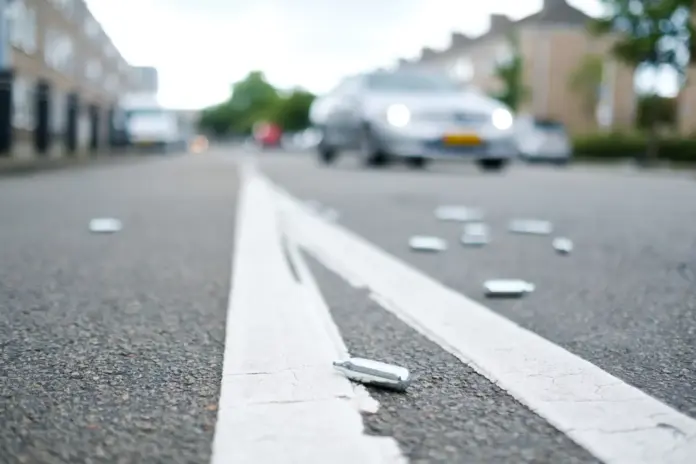
In Cannes, three detectors now allow municipal police to search for the presence of nitrous oxide in the exhaled air of drivers. A first positive check has already resulted in a fine.
The city of Cannes is strengthening its controls against nitrous oxide. Three detectors have been handed over to municipal police to detect the presence of this gas in the exhaled air of drivers. The operation is similar to that of a breathalyzer, with testing conducted directly in the breath.
The municipality claims to be the first town hall in France to equip its municipal police with this type of device. The objective concerns road safety, as nitrous oxide is increasingly being used for recreational purposes.
During the night from Friday to Saturday, ten tests were carried out in Cannes. One driver tested positive and was fined. The vehicle was immobilized and another test was conducted more than an hour later. The second test came back negative and allowed the driver to continue on his way.
In the same vehicle, a passenger was fined for consuming nitrous oxide. Three other people were also fined for possessing cartridges.
A detector that operates within a still particular legal framework
The municipality recalls the risks associated with nitrous oxide consumption. The gas can impair the abilities necessary for driving and cause neurological damage, paralysis, asphyxia or cardiac rhythm disorders.
A legal question accompanies the use of the new device. The detector used by municipal police is not certified. The fine is therefore based on a municipal decree adopted in 2025 prohibiting the sale of nitrous oxide cartridges.
“The legal framework does not yet provide a precise judicial response,” acknowledges the mayor of Cannes, David Lisnard. The mayor nevertheless assures that he wants to “anticipate the Ripost law” and has chosen to “prioritize user safety.”
The municipality thus views the device as a means of intervention pending the new national framework. The Ripost law has just modified the rules concerning nitrous oxide.
The Ripost law will modify the rules starting in 2027
The Ripost law strengthens sanctions against several everyday offenses, including the misuse of nitrous oxide. The text notably provides for a general prohibition on the sale of nitrous oxide to individuals. This measure is to take effect on February 1, 2027.
Cannes’ initiative thus comes as national regulations evolve. The Senate had already worked on regulating nitrous oxide and on the means available to local authorities to act against the consequences of its misuse.
In the Alpes-Maritimes, Senator Alexandra Borchio Fontimp has also mobilized on this issue. As early as February 2025, the parliamentarian had called upon the Interior Minister about “the dangers linked to the misuse of nitrous oxide and its impacts on public safety and health.”
In March 2026, Alexandra Borchio Fontimp announced the adoption of two amendments as part of the examination of the bill relating to the regulation of nitrous oxide.
The first amendment concerned the prohibition of certain containers allowing direct inhalation of the gas. The senator then spoke of “hospitalizations, severe neurological sequelae, broken life paths.” The measure targeted “the material supports for misuse,” without calling into question authorized professional uses.
The second amendment concerned the consequences of these uses for local authorities. The device provided for allocating the proceeds of fines related to nitrous oxide infractions to the investment section of municipalities.
Alexandra Borchio Fontimp highlighted “massive deposits of cartridges on public roads, degradation, nuisances, increased mobilization of municipal services and sometimes municipal police.” The redirection of penalties was to allow financing of “local prevention, safety and equipment actions, without creating new spending for the State.”
The Senate had also adopted a text aimed at prohibiting the sale of nitrous oxide to individuals. Previously, the sales ban concerned only minors. The text adopted provided that it would be “prohibited to sell, offer, possess or transport nitrous oxide.”
The fine amount was set at 7,500 euros, with refunds to municipalities.
Mobilization undertaken after several tragedies
The issue thus extends beyond the Cannes framework alone. In Nice, Christian Estrosi launched, on Tuesday, November 11, 2025, a national petition calling for the prohibition of nitrous oxide sales to individuals. The initiative followed several tragedies related to the misuse of this gas.
Since summer 2025, a Nice municipal decree prohibits the consumption, possession, and deposit and abandonment of nitrous oxide on public roads. Since October 1, 2025, sales are also prohibited to adults, except for professionals who can prove their business activity.
Christian Estrosi had then stated: “since this summer, we have adopted a municipal decree prohibiting the consumption, possession and deposit and abandonment of nitrous oxide on public roads; and since October 1, the sale of nitrous oxide is prohibited to any adult unless they demonstrate that they are business professionals.”
The petition also called for the creation of a criminal offense to punish the resale and massive possession of nitrous oxide. Additional resources to monitor online sales were also requested. “We are not seeking controversy, but results. There have been too many tragedies, too many victims. Let us not wait for the next broken family to act,” the former mayor of Nice concluded.
Following the death of Nice firefighter Jérémie Boulon, caused by a driver under the influence of the substance, Alexandra Borchio Fontimp also requested a legislative response. The senator notably argued that driving under the influence of nitrous oxide could be punished “even in the absence of an accident.”
On June 26, after another fatal accident on the A8 highway, the parliamentarian renewed this call: “It is urgent to combat driving behaviors related to the use of nitrous oxide.” The senator also felt: “this new tragedy, which claimed the lives of at least three people and left one person in critical condition, must alert us collectively.”
With the detectors now used in Cannes, the measures adopted in the Senate and the imminent entry into force of new national provisions, the fight against nitrous oxide thus takes place at several levels, between municipal controls, prevention and the evolution of legislation.
NicePremium is a free, independent local news outlet.
Help us keep going by supporting our work from €5 per month.


