
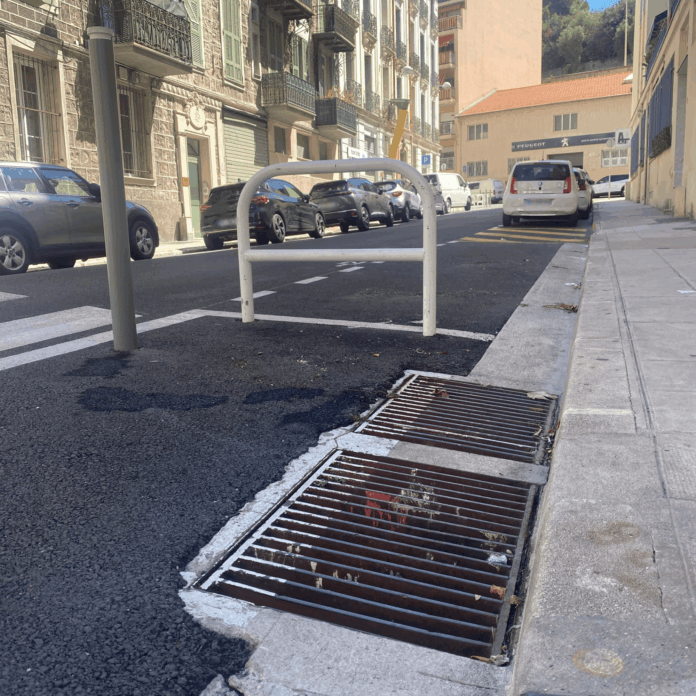
Several Nice districts have been impacted by strong sewage odors since the beginning of summer. Similar to rotten egg smells, these emanations are the consequence of the heat affecting France for several weeks. A daily ordeal for the affected residents. In this context, the Eau d’Azur utility company has already taken initiatives.
27°C, that’s the temperature of effluents in Nice, or about 2°C above normal. The reason: “nighttime temperatures that no longer drop since the month of July“, according to Hervé Paul, president of Eau d’Azur utility. “This increase therefore accelerates fermentation and the formation of H₂S gas, also called hydrogen sulfide“, he clarifies.
It is precisely this gas that is at the origin of the foul odors present in several districts, such as Pasteur, Cessole or even in the east of the city. Jacques, a resident of the eastern districts, is indeed a victim of this phenomenon: “I can’t even open my windows to cool down even a little, it smells really bad in the evening.” An identical feeling for Nadia, who is especially worried about her children: “The little ones complain about the smell as soon as they step outside, it’s complicated to go to the park in these conditions.“
At the Ferber tram stop, a few dozen meters from the Haliotis treatment plant, a resident confirms the ordeal of summer evenings: “Usually, we didn’t even pay attention to it. But now, for the past few weeks, it’s really unbearable, especially when there’s no wind.“
Residents trained to identify odors
To try to moderate the problem, Eau d’Azur is mobilizing by implementing an unprecedented initiative: a nose jury, composed of volunteers living near the treatment plant. Trained in olfactory recognition for the occasion, these citizens are tasked with precisely describing the emanations they perceive on a daily basis. Technical teams can therefore better assess the extent and location of the phenomenon.
Other actions have already been implemented. Calcium nitrate and ferrous chloride are injected into pumping stations, anti-backflow flaps are installed and interventions are taking place to humidify dried-out sewer vents. Fifteen odor sensors have also been deployed between the port and the Haliotis station to monitor hydrogen sulfide levels.
Haliotis 2, the solution for tomorrow
This mobilization is part of a financial effort by the Metropolis. An envelope of 19.4 million euros is already set aside for sanitation for the years 2027/2028. Part of these investments is mainly intended to serve Haliotis 2.
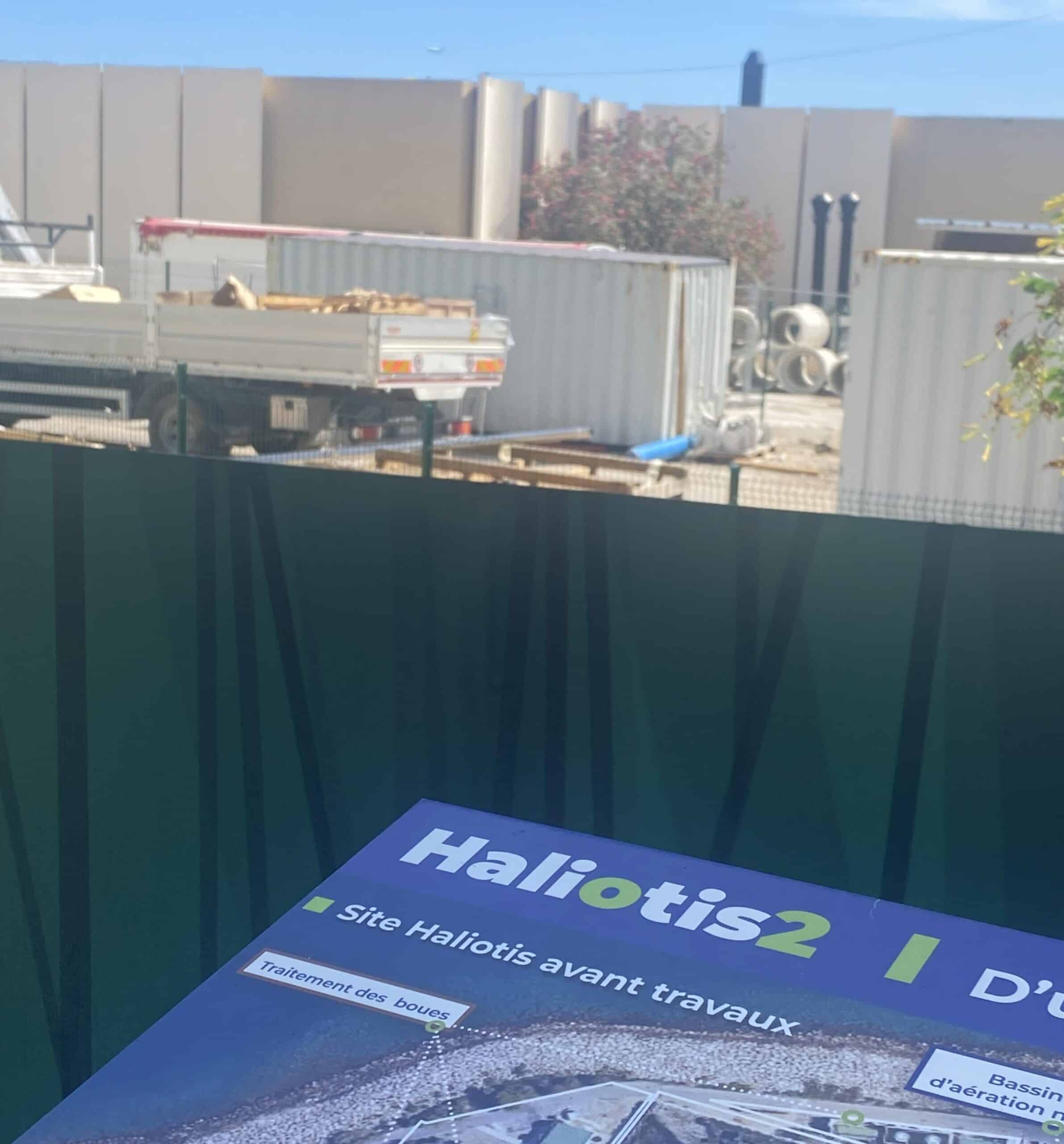
This project aims to completely modernize the city’s treatment plant, to make it an energy-positive facility serving 26 municipalities. The objective is notably to strengthen odor treatment, with more than 28 deodorization towers capable of treating 300,000 m³ of air per hour. The end of construction is scheduled for 2031.
To report any odor nuisance, the water sanitation service invites you to contact Allô Mairie at 3906.
NicePremium is a free, independent local news outlet.
Help us keep going by supporting our work from €5 per month.


