
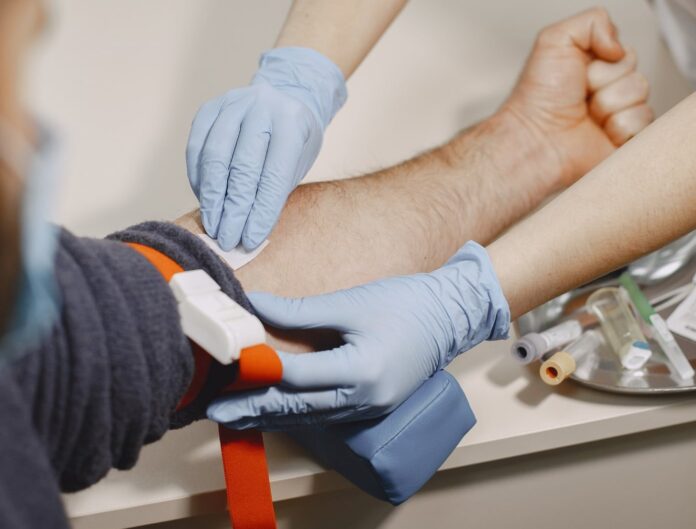
Until March 28th, a themed operation led by the French Blood Establishment in Provence-Alpes-Côte d’Azur seeks to combine culture and public health. This initiative aims to encourage donations as a sensitive period for reserves approaches.
The world of cinema makes its way into collection sites until March 28th. This initiative, conceived by the French Blood Establishment Provence-Alpes-Côte d’Azur-Corse, aims to highlight a constant issue. Blood and plasma donation remains essential throughout the year, despite periods when mobilization decreases.
For six days, donation centers and mobile collections will change their atmosphere. Cinematic-inspired decor, fun activities, and quizzes will punctuate the events. Each space offers an immersive experience designed to create a different environment. The goal is based on a simple idea: attract new donors and retain regular ones in a less formal setting.
The initiative is not solely based on an aesthetic dimension. There is also a particular focus on conviviality. Refreshments, an important moment after donation, align with this theme. The aim is to transform a medical act into a collective experience.
A Crucial Period for Reserves
This operation follows the vintage week and occurs at a specific time of the year. April and May consistently mark a decline in reserves. Movements, vacations, and changes in routine impact the attendance at collections. Meanwhile, hospital needs remain stable.
Constraints related to blood products reinforce the need for anticipation. Platelets are only stored for seven days. Red blood cells have a lifespan of forty-two days. These limits require constant replenishment of donations. No long-term durable stock can be constituted.
In this context, every contribution counts. Blood donation reminds us of an essential fact: “each donation can treat up to three patients.” This reality provides a concrete measure of individual impact. Regular mobilization thus becomes indispensable to ensure continuity of care.
Spring thus appears as a strategic period. Donating at this time helps to compensate for upcoming declines. This anticipation prevents stock tensions and secures medical care.
Diversifying Donation Forms
The campaign also highlights the diversity of possible donations. Blood donation remains the most well-known. Access is intended to be simple and quick, often making it a first step for new participants.
Plasma donation holds an important place in numerous treatments. This resource is notably used in the production of medications. Demand remains high, necessitating specific mobilization.
Platelet donation, on the other hand, addresses a particular urgency. Its very short shelf life makes the collection more sensitive. The needs are constant, especially for patients affected by certain serious conditions.
Each profile can thus find a way to contribute. The campaign emphasizes this complementarity. Participation adapted to each person’s availability helps to strengthen the entire system.
Local and Accessible Mobilization
Organizers focus on proximity to reach the public. Collection sites are spread across the entire regional territory. Donation centers welcome participants year-round. Mobile collections complement this approach by reaching out to residents.
Practical information remains accessible online, notably through the dedicated site and mobile application. This setup facilitates appointment scheduling and identifying collections closest to participants.
This thematic week is part of a broader strategy. The challenge is to maintain a sufficient level of donations throughout the year. One-off operations help to create key moments, such as the Red & Black Blood Donation campaigns with OGC Nice, but regularity remains key.
With this initiative, the French Blood Establishment aims to renew forms of awareness. The combination of culture and civic engagement offers a new entry point. Cinema becomes a medium to remind people of a simple reality: the need for blood never takes a break.
More information by phone at 04 92 00 10 69.
NicePremium is a free, independent local news outlet.
Help us keep going by supporting our work from €5 per month.


