
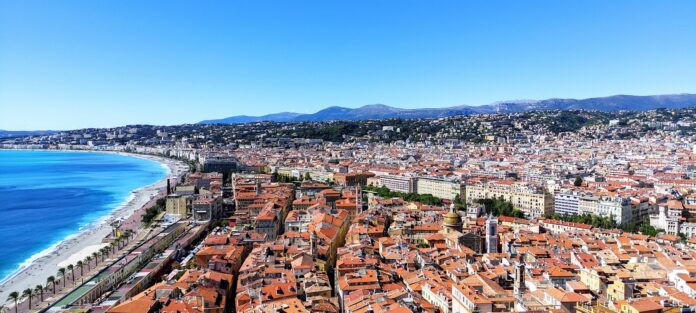
The Côte d’Azur real estate sector is alerting to a territory under strain and calling for coordinated action by publishing a new edition of the Manifesto for an intelligent and sustainable territory. A collective initiative bringing together the Nice Côte d’Azur Chamber of Commerce and Industry and many economic stakeholders.
The preamble recalls a shared ambition: “to build together concrete solutions to the real estate problem in our department.” This determination collides with a reality described with precision by the contributors.
Dominique Estrosi-Sassone evokes “a profound housing crisis” and emphasizes land that has become a major obstacle. According to the senator, “the price of building land has tripled” and can represent “up to 50% of the total cost of a project.” The need for a controlled land strategy emerges as a central point. The senator also calls to “free up innovation and local initiative.”
Jean-Pierre Savarino, president of the Nice Côte d’Azur Chamber of Commerce, describes a situation worsened by successive crises. “The health crisis, the war in Ukraine, inflation and the evolution of banking rates have led to a genuine and lasting housing crisis.” The Chamber president recalls a growing inadequacy between supply and demand, with direct consequences on economic attractiveness.
Franck Cannata, president of UPE06, highlights a massive impact on businesses. “Nearly nine out of ten companies face problems housing their employees.” The cost of housing absorbs “on average 30% of income” and rental tensions are intensifying. The decline in construction further increases pressure: “-22% of building permits issued.”
Cyril Messika, president of the Real Estate Observatory of Housing, describes a “polycrisis” mixing rising rates, inflation, multiplication of standards and competition between uses. The effects are immediate: “Only 2,908 new homes put up for sale in 2025”, high prices and plummeting rental supply.
The figures published confirm this trend:
- Median price in existing homes: €4,810/m² in 2025
- Average price for new: €6,987/m²
- Rental supply halved since 2019 (base 100 → 53 in the Alpes-Maritimes)
- Building permits down 20% between 2024 and 2025
- New home sales virtually stable but insufficient: +2%
- Listings in slight increase: +12%, but far from real needs
These figures illustrate a territory where demand far exceeds production capacity, with a direct impact on workers, businesses and local authorities.
A call for local strategy
The contributions converge toward the same idea: the housing crisis can no longer be addressed through piecemeal adjustments. Dominique Estrosi-Sassone calls for “a comprehensive approach” and a housing policy integrated with mobility, employment and economic development policies.
Jean-Pierre Savarino insists on the need for renewed dialogue with mayors, considered as the actors closest to local needs. The president of the Nice Côte d’Azur Chamber of Commerce reminds that the Manifesto must feed the roadmap “Côte d’Azur 2040.”
Franck Cannata highlights a competitiveness issue. The lack of housing for workers leads to job withdrawals, recruitment difficulties and loss of attractiveness. “Nearly one candidate in five today gives up a job due to lack of affordable housing solution.”
Cyril Messika recalls that 70% of the population of the Alpes-Maritimes is eligible for social housing, a sign of an unbalanced market where modest and middle-income households struggle to find housing.
The Manifesto proposes over 70 action paths, of which 30 are considered priority, to restart production, control land, adapt urban planning rules, support investment and develop temporary solutions for workers.
The publication of the Manifesto recalls a reality shared by all stakeholders in the territory. The housing crisis is braking the economy, blocking residential pathways and weakening the attractiveness of the Alpes-Maritimes. The contributions gathered highlight a need for coordination, land control and adaptation of rules to restart production. The figures confirm the scale of the challenge and show a market under sustained pressure. The coming months will tell whether the proposals carried collectively will make it possible to embark on a more stable trajectory and meet the needs of workers and businesses.
NicePremium is a free, independent local news outlet.
Help us keep going by supporting our work from €5 per month.


