
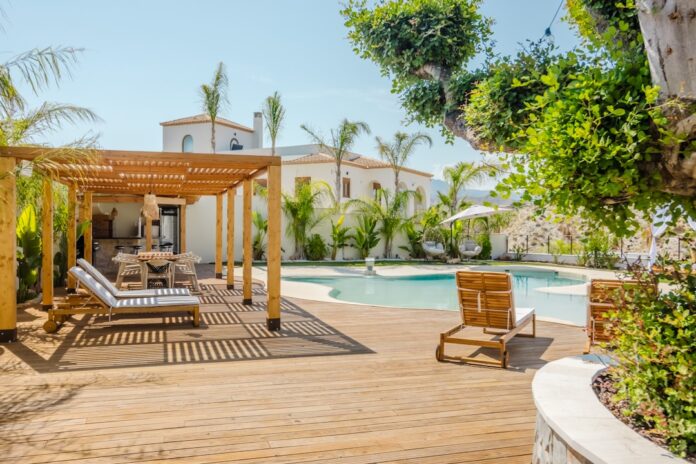
Summer is settling in fully over Nice with its share of scorching days, sun-drenched terraces and balconies that sometimes resemble furnaces more than green havens. While people from the Côte d’Azur are accustomed to the Mediterranean climate, their plants deserve particular attention during this period. Between increasingly frequent heat waves and vacation departures, a few simple gestures can help preserve the health of your garden, terrace or balcony.
Understanding why heat puts your plants under strain
Contrary to popular belief, Mediterranean plants are not invincible against extreme heat episodes. Certainly, olive trees, lavender, rosemary and bougainvillea are naturally adapted to the Côte d’Azur climate. But during prolonged heat waves combined with severe drought, even these particularly resilient species can show signs of stress.
When temperatures rise, plants transpire more through their leaves to regulate their temperature. This phenomenon, called foliar transpiration, causes significant water loss. If roots can no longer absorb enough water, leaves wilt, turn yellow, or even fall prematurely.
Potted plants are even more vulnerable. With limited soil volume, the substrate can dry out in just a few hours, while containers exposed to the sun quickly accumulate heat, putting roots under severe strain.
Leaf burn is also a frequent risk: leaves exposed to direct sunlight for several hours can develop brownish or desiccated patches, signs of irreversible dehydration of plant tissues.
The right steps to protect your garden or balcony
Adapting watering to intense heat
In summer, watering should be done early in the morning, ideally before 9 a.m., or in the evening after 7 p.m. At these times of day, water penetrates the soil more easily without evaporating immediately due to heat.
It is preferable to water abundantly but less frequently rather than perform small daily waterings. This method promotes the development of deeper roots, capable of reaching moisture in lower soil layers and better resisting drought periods.
For potted plants, a simple substrate check is sufficient: push a finger in a few centimeters. If the soil is dry, it’s time to water.
Also avoid watering during the day. Much of the water evaporates before reaching the roots and the thermal contrast can weaken plants. It is always better to water directly at the base of plants rather than wetting the foliage.
Mulching, an essential ally
Mulching remains one of the most effective methods to limit the effects of summer heat. A layer of wood chips, dead leaves, straw or pine bark greatly reduces water evaporation, maintains a more stable temperature at root level and limits weed growth.
Pine bark is particularly appreciated in Mediterranean gardens, both for its natural appearance and its excellent ability to retain soil moisture. A layer of 5 to 8 centimeters is generally sufficient to achieve effective results.
Providing some shade to the most fragile plants
Not all plants enjoy the intense sun of the Côte d’Azur. Ferns, hostas, impatiens and certain young plantings find it difficult to tolerate the hottest hours of the day.
On a terrace or balcony facing full south, a shade cloth, a pergola or simply temporarily moving pots between noon and 4 p.m. can considerably limit heat stress.
Plants grown in pots have precisely this advantage: they can be moved easily depending on sun exposure.
Going on vacation without sacrificing your plants
Summer departures always raise the same question: how do you keep your plants healthy during several days of absence?
Automatic watering systems
Drip irrigation kits have become widely available. Some models can even be controlled from a smartphone to precisely program watering periods.
These systems also allow better control of water consumption, an important point in a context where prefectural restrictions may be implemented during drought episodes.
Before carrying out significant watering, it is also recommended to check for any restriction measures decided by the Alpes-Maritimes prefecture.
Ollas and watering cones
For those who prefer natural solutions, ollas are experiencing a real resurgence of interest. These porous terracotta jars, buried at the base of plants, gradually release water directly to the roots for several days.
Ceramic or glass watering cones work on a similar principle and provide a simple solution for balconies and small terraces.
Choosing plants suited to the Mediterranean climate
Selecting species naturally resistant to heat remains the best way to limit water needs.
Beyond the classic lavenders, rosemaries, bougainvilleas and olive trees, sedums and sempervivums easily withstand several weeks of drought. Lantanas offer generous flowering throughout summer while attracting many pollinators.
Oleanders also remain reliable values in the Mediterranean landscape, while thyme, savory and basil thrive perfectly on Côte d’Azur terraces.
A Mediterranean garden can remain lush despite heat waves
Taking care of your plants during summer is not just a matter of aesthetics: it is also a way to preserve a plant heritage often severely tested by increasingly intense climate episodes.
By adapting watering, protecting the soil through mulching, providing some shade to the most sensitive species and favoring plants suited to the Mediterranean climate, it is entirely possible to maintain a green garden or balcony, even in the height of summer.
Take this weekend to observe your plantings: a few simple gestures today will allow your terrace or garden to pass through the coming weeks of heat with ease.
NicePremium is a free, independent local news outlet.
Help us keep going by supporting our work from €5 per month.


