
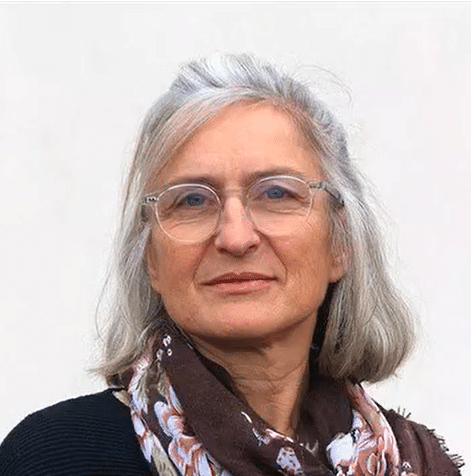
On the eve of the first round of municipal elections, the editorial team of Nice Premium offers you a series of identical interviews with the list leaders who responded favorably to our request. The objective is to allow you to better understand the positions of the various candidates in the municipal election in Nice.
Three lists did not follow up despite several reminders: All for Nice (Christian Estrosi), for scheduling reasons; To Reclaim Nice (Cédric Vella), which did not keep its appointment; and The Best is Yet to Come (Eric Ciotti), which ignored our requests.
The four other lists, namely Nice Popular Front (Mireille Damiano), Nice Direct Democracy (Céline Forjonnel), Workers’ Struggle – The Workers’ Camp (Estelle Jaquet) and United for Nice (Juliette Chesnel-Le Roux), answered ten general questions and sent a message to Nice voters.
It is now the turn of Estelle Jaquet to answer our questions:
If you are elected, what would be your absolute priority for Nice during the first 100 days of your term?
“ I don’t think I will have a mandate over Nice, we need to be clear about that. I’m not running to have a program only for Nice. If I am running in these elections, which are municipal, it’s to promote a program for all working people.
Workers in Nice, female workers in Nice have exactly the same interests as all workers in this country, which would be to challenge this capitalist society that is leading us to the disaster that we are seeing right now, with this war that is generalizing. So it’s this program for workers that I’m putting forward in these elections.
We have a revolutionary communist program. We believe that capitalism is a society founded on private property, the pursuit of individual profit, competition, and it leads to disaster and the exploitation of working people.
For us, in this society where we have science and techniques that have achieved extraordinary progress, we could very well all live decently, produce what we need, free humanity from material problems. That’s communism. A society where we would all live from our work according to the interests of the planet, because we would produce according to our needs, simply.
What will be your strategy on public space safety?
Safety is a real problem in this society. In neighborhoods, but not only. Safety in general is a problem because we live in a society that increasingly leaves people behind. Precariousness is increasing, poverty is increasing, the number of neighborhoods where this poverty is piling up is increasing. We won’t get rid of safety and insecurity problems with more police, more surveillance cameras.
We can see it, anyway, unfortunately, safety will only be found when people in neighborhoods manage to mobilize to challenge the way things work. And then when everyone has access to a decent standard of living, in a society — especially in Nice, which is full of wealth, with yachts, increasingly numerous and increasingly rich billionaires — and which leaves more and more children, more and more people, who don’t even have access to housing to sleep in. I think that safety cannot be found like that. It cannot really exist.
What concrete measures will you propose to address the housing crisis in Nice?
Well, the housing crisis, first of all, is not just in Nice, it’s general. Of course, we would need to build housing, except that I think the mayor is not really the only person who can have control over it. Those who decide to build housing are construction companies. It’s Vinci, for example. These companies, their objective is to make profits. So their objective is to build housing that makes money. Social housing, I think that’s not even a subject for them.
The other aspect, and something that the city council has absolutely no control over, is wages. Now, to be able to afford housing between 25 and 34 years old, you have to have the means. And who decides wages? It’s the bosses, who today are not trying to increase them, quite the opposite. To increase their profits, their earnings, they are actually trying to reduce them more and more. So housing is the same. We’ll need those who produce this housing, those who build it, to have the ability to build it for themselves. Because today, they build them in Monaco, for example, for billionaires. And they’re the same ones who, when they come home after work, sometimes, live in housing that is not dignified, really.
What mobility policy will you implement to reduce traffic jams and improve daily transportation?
There should be much more free public transportation. I think that would change a lot. Another aspect too: it’s absurd that we have to travel so many kilometers to get to work. All of this is linked to rent prices, because we live where we can live, and not necessarily next to our workplace. So to solve transportation problems, it’s the same, we would need to sit down at a table.
To go to the industrial zone in Carros, you have one, two, three buses that leave from the corner at times that actually allow workers who start earliest to get there. But it’s not possible. In reality, the vast majority of workers are forced to take their car. That means we really need to change the way we think about housing for workers.
How will you support local downtown commerce?
For shops to do well, wages need to be high. You know, it’s still a bit the problem. It’s that indeed, I think today there are many small traders who are struggling to get by. First because they are in competition with very large ones, like big distribution centers — Leclerc, Carrefour — which make billions in profits. Indeed, when you have a small trader facing that, it’s difficult.
Workers and traders have the same interest in opposing these big distribution capitalists who make billions in profits. I think that for them to be able to live, all wages need to increase, pensions need to increase, purchasing power needs to increase so that everyone can have access to these small downtown shops.
How will you guarantee equitable access to sports, culture and public facilities in all neighborhoods of the city?
I’m telling you, I don’t think I’ll be mayor. It would be nice if everyone could have access to sports, it would be nice if everyone could have access to music and culture. But for that, we need to be in a society that aims for everyone to have the same access to all cultural life that can exist.
So of course we need places to do sports, but above all it needs to be free. Maybe school could be that place. We have the means, there are public schools anyway. We have the means to allow all youth, all children, to do sports, to be cultured. But that’s not what’s prioritized in this society and it doesn’t depend on the city council. Today, we have school policies that consist of reducing the number of teachers, increasingly reducing the number of adults looking after children. We’re not going in that direction, and we’ll go even less with the war beginning: the state’s money will go more to building fighter jets than to building schools.
What place will you give to local democracy and citizen participation in your decision-making process?
For there to be less abstention, maybe people would need to feel that elections concern them, and that it makes it possible to change things. I invite people to vote for me, to say that indeed things need to change. I invite them to vote to express their anger too against this society. But I can understand that they don’t really see why to vote.
We met a huge number of workers, especially when we put together our list, who don’t see the point, who are disillusioned, who don’t see why they should vote. Not to mention all those who don’t have the right to vote. There are still hundreds of thousands of workers in this country who work, who pay their taxes and who don’t have the right to vote. I am in favor of everyone having the right to vote. And then I would be in favor of, when we vote, being able to have real power.
Tomorrow, what will allow things to change will not be by going to vote. It will be when we collectively take control of the means of production at our workplaces, in our neighborhoods, when we make policy ourselves and direct this society ourselves. That’s what, in reality, the perspective I defend is, more than the fact that everyone goes to vote.
How do you plan to fight abstention and strengthen electoral participation in Nice?
I am in favor of very, very direct democracy. I’m even in favor of it being people who permanently vote on decisions, who elect. And I’m in favor of the revocability of elected officials. I’m in favor of those we elect being controlled, being controlled by the population that elects them.
And also that we revoke them if they no longer work out. I’m even in favor of democracy in companies. I’m in favor of people who work being able to decide how they work, what they do.
And the same, they would also elect their representatives who would run these companies. So I’m in favor of democracy everywhere. And a popular democracy that doesn’t exist at all in our society.
In our society, there cannot be democracy because in reality there is no general interest. There is one social class that exploits another. And we can’t decide that.
We don’t elect our exploiters. We can’t really decide anything in this society. The decisions that are made are not made for everyone. They are made according to the interests of this small minority.
What message do you wish to send to the people of Nice?
We need to be concerned about the future. I first call on them to look at what we say, to consider the problem of the future, to come to the realization that yes, it’s possible that things can change, but not in this capitalist society.
Capitalism, the only perspective it offers us, is this war that is generalizing. It is barbarism, really, for more and more people. It is precariousness, exploitation.
Looking ahead, working conditions will get worse. The bourgeoisie, the capitalists, they are waging war on workers. They are waging war among themselves on our backs.
An economic war, a social war, an actual war, and that’s on our backs. I call on the people of Nice to become aware of their capacity, our capacity as workers, to change that, and of the necessity to organize ourselves, to talk among ourselves and to prepare ourselves tomorrow to question this capitalist society and to overthrow it.”
Remarks collected by Maïlys Le Deunff
Editor’s note: questions about the development of the Nice coastline and municipal debt were not asked to Estelle Jaquet, as she did not express specific ambitions for Nice.
NicePremium is a free, independent local news outlet.
Help us keep going by supporting our work from €5 per month.


