
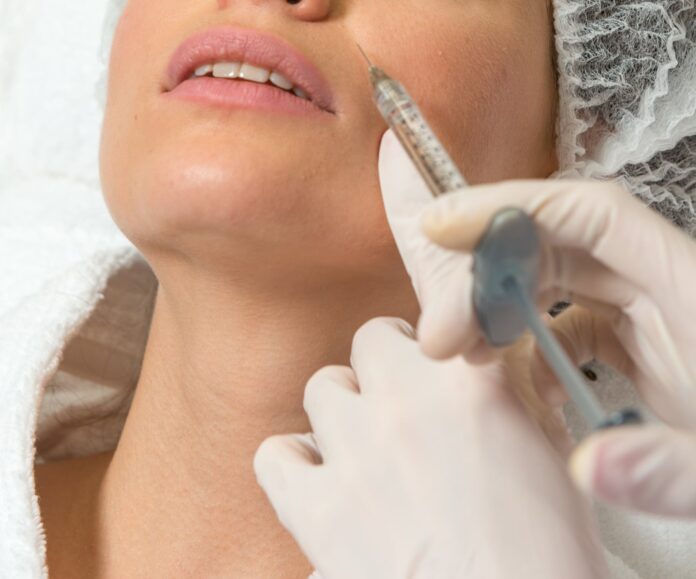
The death of a 25-year-old woman in a beauty institute in Nice raises questions about aesthetic injections performed outside a medical framework. As a judicial investigation is underway, a new regulatory system came into effect in early July to better regulate aesthetic medicine.
A 25-year-old woman died on Monday, July 27 in a beauty institute located in western Nice. The Nice prosecutor’s office opened an investigation for illegal practice of medicine, involuntary manslaughter, and administration of harmful substances. The investigations are now focusing on the hypothesis of an illicit injection of an anesthetic product that would have caused a violent allergic reaction.
The tragedy occurred around 3:30 p.m. in an establishment located at 82, rue Auguste-Pégurier. Coming to receive an aesthetic treatment, the young woman suffered a medical emergency. Firefighters and the SAMU 06 (emergency medical service) intervened quickly, but were unable to resuscitate her.
According to several consistent sources, an anesthetic product administered in the buttock area could be at the origin of the death. This hypothesis constitutes, at this stage, the scenario favored by investigators, but will need to be confirmed by ongoing investigations.
In a statement, the prosecutor of the Republic of Nice, Damien Martinelli, confirmed “the death on July 27, 2026 of a 25-year-old person in an aesthetics salon in Nice under circumstances that the investigation opened on the grounds of illegal practice of medicine, involuntary manslaughter, and administration of harmful substances aims to clarify.”
The investigations have been entrusted to the local judicial police service. The three people placed in custody, two women and one man, are to be brought before justice.
Clandestine networks at the heart of concerns
This death occurs less than four months after that of a woman in Villeurbanne under similar circumstances. According to the Circle of Good Practices in Aesthetic Medicine, these cases reflect a progression of procedures performed outside the medical framework.
Dr. Éric Essayagh, co-president of the Circle of Good Practices in Aesthetic Medicine and aesthetic physician in Nice, reminds that an aesthetic injection cannot be considered a simple aesthetic treatment. “An aesthetic injection is a medical procedure that requires training, perfect knowledge of anatomy, and the ability to immediately manage a complication.”
According to the practitioner, injections performed outside the medical circuit have become a worrying phenomenon. “Today, we estimate that more than 40% of aesthetic injections are performed outside the medical framework, in apartments, institutes, or places that escape any control. This clandestine market has become a real public health issue.”
The physician believes that clandestine networks continue to develop, notably through social networks, despite recent regulatory developments. “Recent regulatory advances constitute an important first step toward better regulating the practice of aesthetic medicine, but they will not be sufficient alone to stop fake injectors (term for unqualified people who offer injections for aesthetic purposes without any recognized medical training, Editor’s note). While the legal framework is gradually being put in place, clandestine networks continue to recruit on social networks and put patients at risk.”
Faced with this situation, the Circle of Good Practices in Aesthetic Medicine calls for strengthened controls. For Éric Essayagh, “after Villeurbanne, then today Nice, it is essential to accelerate the fight against these illegal practices, strengthen controls, dry up supply channels, and enable patients to immediately identify truly qualified practitioners.” The physician concludes with a warning: “Each new tragedy is one too many. We cannot wait for a third death to consider there to be a public health emergency.”
New regulations came into effect in July
The death in Nice occurs a few weeks after an important change in regulations. Published in the Official Journal on July 10, 2026, Decree No. 2026-611 and its implementing order create a “supplementary right to practice” in aesthetic medicine.
From now on, a physician registered with the Medical Board can obtain official recognition of this competency provided they can demonstrate appropriate training, sufficient experience, and at least three years of practice in their specialty. The application is examined by the departmental council of the Medical Board following advice from the national qualifications commission.
The system also specifies that this activity can only be practiced in addition to the practitioner’s original specialty. The objective is to better identify qualified professionals and strengthen the oversight of aesthetic medicine procedures.
The investigation opened in Nice must now determine the exact circumstances of the young woman’s death and establish whether medical procedures were practiced outside the legal framework.
NicePremium is a free, independent local news outlet.
Help us keep going by supporting our work from €5 per month.


