
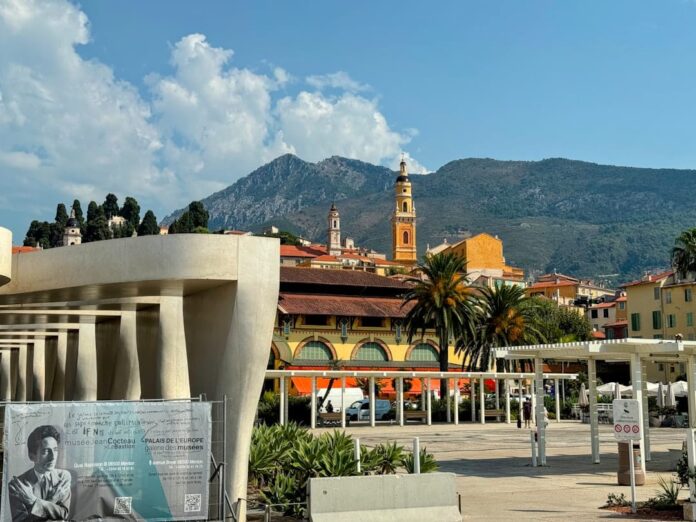
In Nice, sometimes you just need to look up to understand that art is not limited to museums. A Belle Époque façade, a baroque chapel, a discreet gallery in the Old Town or the light filtering through the Cimiez gardens remind us that creativity is an integral part of the landscape. In summer, when the rhythm of the city slows down slightly despite the influx of tourists, it offers the ideal opportunity to rediscover this living heritage and take a fresh look at a cultural history that continues to unfold.
Memory as raw material
Great French literature has often made memory a territory of exploration. Georges Perec with W or the Memory of Childhood, Marguerite Duras in The War: A Memoir and J. M. G. Le Clézio have shown how personal memories can join a universal reflection on identity, transmission and time.
This approach finds new resonance today among many contemporary writers, who blend documentary inquiry, intimate narrative and fiction to question our relationship with the past. These works remind us that memory is never fixed: it is constructed, confronted with facts and nourishes our understanding of the present.
In Nice, independent bookstores remain privileged places to discover these new voices. More than simple shops, they remain spaces for exchange where readers and booksellers share their discoveries and maintain genuine local intellectual life.
Architecture, a work under open sky
Art is limited neither to museum walls nor to the pages of books. Architecture too tells of an era, a vision of society, a way of inhabiting the world. Victor Hugo understood this perfectly when he drew castles, cathedrals and ruins throughout his travels.
Nice offers a remarkable dialogue between styles. The alleyways of the Old Town, baroque churches, Belle Époque villas in Cimiez, the facades of the Promenade des Anglais and certain modernist achievements of the twentieth century make up an architectural heritage of great diversity. Each neighbourhood tells a chapter in the history of the city and its development.
For the stroller and the artist alike, this richness constitutes a permanent source of inspiration where stone dialogues with Mediterranean light.
Nice’s museums, between heritage and renewal
The Matisse Museum, housed in a seventeenth-century Genoese villa in Cimiez, remains one of the essential places in Nice’s cultural life. Its permanent collections, its drawings, sculptures, cut papers as well as works and documents dedicated to the Rosary Chapel in Vence allow us to follow Henri Matisse’s artistic evolution and understand how much the light of the Côte d’Azur nourished his work.
The Marc Chagall National Museum is also a major stopping point. Designed around the Biblical Message cycle, it houses one of the most important public collections devoted to the artist and offers a journey where painting, spirituality and architecture dialogue with remarkable harmony.
The Museum of Modern and Contemporary Art (MAMAC), currently closed for major renovation work, continues to bring its collections to life through off-site exhibitions and cultural partnerships. A way of reminding us that museums are not merely places of conservation, but also living agents of contemporary creation.
The Mediterranean, an inexhaustible source of inspiration
Since the late nineteenth century, the Côte d’Azur has attracted painters, writers and photographers seeking incomparable light. Auguste Renoir in Cagnes-sur-Mer, Paul Signac in Saint-Tropez and Fauve artists found in Mediterranean landscapes a field of experimentation that profoundly marked the history of art.
Literature is no exception. The work of J. M. G. Le Clézio maintains a constant dialogue with the Mediterranean and the landscapes of the South. In Mondo and Other Stories as well as The Unknown on Earth, light becomes almost a character, transforming our view of the world as much as of ourselves.
This relationship between territory and creation continues to inspire many authors, artists and photographers today who make Nice and the Côte d’Azur far more than a backdrop: a true subject of expression.
A cultural scene always in motion
Nice’s cultural wealth does not rest solely on its institutions. Theatres, galleries, artistic associations, festivals, concerts and public readings contribute throughout the year to fostering a particularly dynamic creative scene.
Summer multiplies the opportunities to discover this vitality: temporary exhibitions, open-air performances, literary meetings and performances regularly invest public spaces and offer residents and visitors alike another way of experiencing the city.
This diversity testifies to a culture that does not simply preserve its heritage, but continues to renew itself through contact with new generations of artists.
Conclusion: cultivating your gaze
Art is not a luxury reserved for a few initiates. It is a way of understanding the world, of questioning our history and of nourishing our sensitivity.
In Nice, this encounter between heritage, contemporary creation and Mediterranean light offers itself almost naturally at the corner of a street, in a museum or a bookstore. Taking time to stop there is to rediscover a city whose cultural wealth far exceeds its image as a seaside destination.
This summer, let yourself be guided by curiosity: push open the door of a museum, wander through the galleries of the Old Town, open a book at an independent bookstore or simply take time to observe the facades around you. Art is everywhere the gaze agrees to linger.
NicePremium is a free, independent local news outlet.
Help us keep going by supporting our work from €5 per month.


